Bloom on a Budget: Stunning Botanical Centerpieces for Every American Holiday
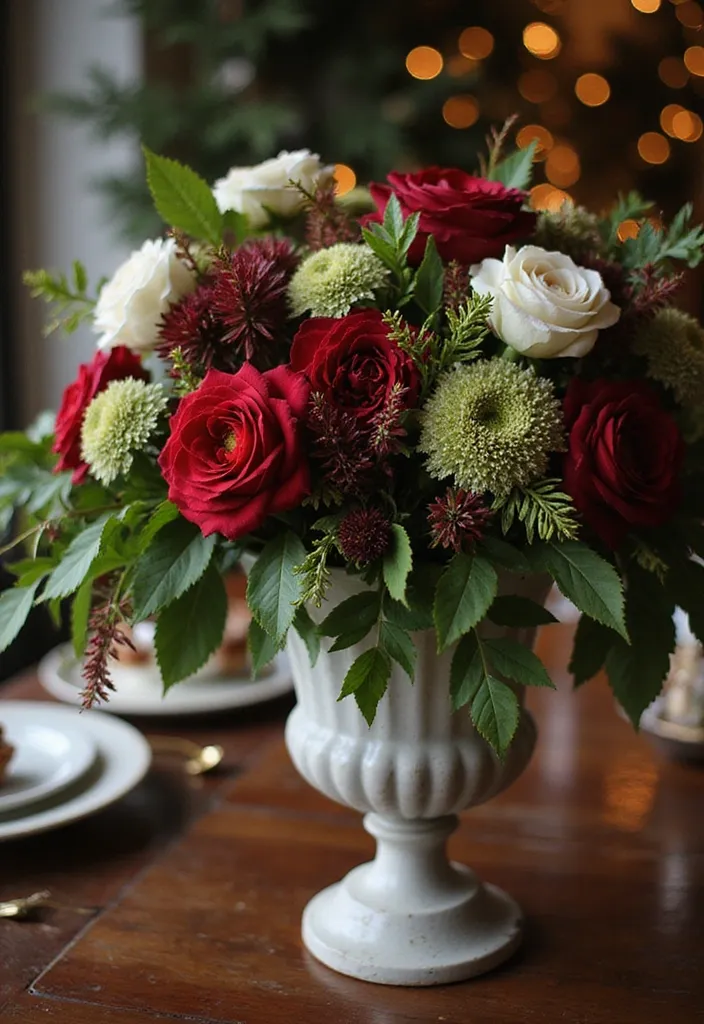
Photo: holiday table centerpiece fresh flowers seasonal botanical arrangement home entertaining, via theaestheticloft.blog
Beautiful botanical design has long carried an undeserved reputation for exclusivity — the assumption that truly stunning floral arrangements belong only to catered galas and professionally staged events. At Tierra Floral Design, we firmly disagree. The art of botanical entertaining is accessible to anyone willing to look closely at what grows nearby, shop thoughtfully, and approach a simple vase with genuine creative intention.
This guide moves through the American holiday calendar season by season, offering practical, design-conscious floral ideas that honor the spirit of each occasion without requiring a florist's budget. Whether you are hosting twelve guests or two, these strategies will help you create tablescapes and installations that feel considered, beautiful, and entirely your own.
Spring: Valentine's Day, Easter, and Mother's Day
Valentine's Day — Beyond the Dozen Roses
The week before Valentine's Day is notoriously the most expensive moment of the year to purchase cut roses. Rather than competing with peak-season pricing, consider a more intimate and often more visually striking alternative: a cluster of mixed pink and cream ranunculus arranged in a collection of mismatched vintage bud vases.
Ranunculus are typically available at Trader Joe's, Whole Foods, and most regional grocery stores throughout late winter and early spring at a fraction of rose pricing. Their layered, tissue-paper petals photograph beautifully and last well over a week with proper care. Supplement with a few stems of dusty miller or silver brunia for textural contrast, and the result is an arrangement that reads as far more artful — and far less predictable — than a standard red rose bouquet.
Budget tip: Purchase stems individually from a local farmers' market rather than pre-assembled bouquets. You will pay for exactly what you need and gain full creative control over color and proportion.
Easter — Garden Abundance on a Modest Scale
Easter tablescapes are among the most forgiving to compose, because the season itself provides such visual generosity. Daffodils, tulips, hyacinths, and muscari (grape hyacinth) are all widely available in March and April across the United States, and all are inexpensive when purchased as cut stems or potted plants from nurseries and grocery stores.
For a centerpiece that doubles as a conversation piece, arrange potted hyacinths directly into a shallow wooden crate or a lined wicker basket. Nestle a few small moss-covered stones or decorative eggs between the pots, and the effect is that of a miniature garden brought indoors. Guests can take the potted plants home afterward, making this a centerpiece that also functions as a parting gift.
Budget tip: Purchase bulb plants in bud — not yet in full bloom — a week before your gathering. They will open in time for your event and last considerably longer than fully opened cut stems.
Mother's Day — A Personalized Floral Portrait
Mother's Day is an occasion that rewards specificity. Rather than a generic arrangement, consider building a centerpiece around the recipient's favorite flower or color palette — even if that means combining unexpected varieties. A loose, garden-style arrangement of sweet peas, lisianthus, and flowering herbs such as chamomile or lavender communicates thoughtfulness in a way that pre-made bouquets rarely achieve.
Local farmers' markets are particularly well-stocked in May across most US regions, offering seasonal specialty flowers unavailable in grocery stores at prices that are genuinely competitive.
Summer: Fourth of July and Backyard Entertaining Season
Fourth of July — Patriotic Palettes with Design Integrity
The red, white, and blue color scheme of Independence Day presents a genuine design challenge: executed without care, it can read as costume rather than composition. The key is to treat the palette as a starting point for sophisticated arrangement rather than a rigid prescription.
Deep burgundy dahlias — rather than primary red — bring richness and complexity to a patriotic arrangement. White lisianthus or white cosmos introduce an airy delicacy that prevents the composition from feeling heavy. For the blue element, consider the dusty, silvered blue of globe thistle or the soft violet-blue of agapanthus, both of which read as blue in context while adding botanical interest.
Arrange these in a collection of mason jars grouped at varying heights along a table runner of fresh greenery — wild fern, eucalyptus, or even large-leafed hosta from the garden. The effect is generous, seasonal, and unmistakably American without resorting to visual cliché.
Budget tip: Dahlias reach peak availability and lowest pricing in late July and August. Purchase from local growers or farmers' markets rather than grocery chains for the best variety and value.
Late Summer Entertaining — Embracing the Kitchen Garden
For casual summer gatherings through August and early September, the most beautiful and cost-effective botanical materials are frequently those already growing in your garden or available at farm stands. Sunflowers, zinnias, marigolds, and black-eyed Susans are all robust summer bloomers that arrange effortlessly and evoke the warmth of the season with unmistakable authenticity.
Do not overlook edible elements as design components. Bunches of fresh basil, trailing rosemary, clusters of cherry tomatoes on the vine, and small gourds can be woven into a harvest-style centerpiece that bridges the boundary between garden and table with genuine charm.
Autumn: Thanksgiving and Halloween
Halloween — Botanical Drama Without the Kitsch
Halloween décor need not sacrifice design integrity for seasonal spirit. A tablescape built around deep plum dahlias, burgundy amaranthus (with its dramatic trailing habit), black-stemmed calla lilies, and clusters of dark hypericum berry creates an atmosphere of gothic elegance that feels intentional rather than novelty-driven.
Add texture with dried lotus pods, preserved magnolia leaves, or branches of bittersweet vine — all widely available at craft stores such as Michaels or directly from specialty floral suppliers. These dried elements require no water and can be composed days in advance, reducing event-day pressure considerably.
Budget tip: Dried and preserved botanical elements are a remarkably cost-effective investment for autumn entertaining. Purchased once, they can be reused across multiple events and seasons.
Thanksgiving — The Art of the Harvest Tablescape
Thanksgiving is the holiday most naturally aligned with botanical abundance, and fortunately, it is also one of the most forgiving for budget-conscious design. The season's palette — amber, rust, cream, and forest green — is supplied generously by nature itself.
Visit a local pumpkin patch or farm stand for small decorative gourds, mini pumpkins, and dried corn husks. Combine these with grocery-store chrysanthemums in deep copper tones, branches of autumn leaves gathered from your yard, and clusters of dried wheat or oat stalks from a craft store. Arranged together in a long, low composition down the center of the table, these materials create a tablescape of genuine warmth and abundance at minimal cost.
For a more elevated variation, replace the grocery mums with garden roses in caramel or terracotta tones, and introduce a few stems of smoke bush for its feathery, cloud-like texture.
Winter: Christmas, Hanukkah, and New Year's Eve
The Holiday Season — Evergreen as Foundation
Winter floral design is anchored by one extraordinary advantage: evergreen materials are both widely available and inexpensive throughout December. Fresh-cut pine, cedar, fir, and juniper branches can be purchased by the bundle at most garden centers and Christmas tree lots for a few dollars, providing an aromatic, visually lush foundation for nearly any winter arrangement.
For Christmas tablescapes, nestle pillar candles of varying heights among a loose arrangement of evergreen branches, pinecones, dried orange slices, and cinnamon sticks. Add a few stems of white amaryllis or red anemone for floral punctuation. The result is a centerpiece that is fragrant, seasonal, and genuinely beautiful without requiring significant expenditure.
For Hanukkah gatherings, consider an arrangement of white tulips, blue hyacinths, and silver brunia berries — a palette that honors the holiday's visual tradition while maintaining botanical elegance.
New Year's Eve — Glamour Through Restraint
New Year's Eve calls for an atmosphere of celebration and anticipation, and botanical design can deliver this without elaborate expense. A single dramatic element — a tall arrangement of white calla lilies in a sleek glass cylinder, or a massed grouping of white and gold spray roses in a metallic vessel — reads as sophisticated and intentional precisely because of its restraint.
Gold spray paint, available at any hardware store, can transform pinecones, dried seed pods, or bare branches into glamorous decorative elements that complement fresh florals beautifully. A scattering of these gilded natural elements along a table runner, paired with candlelight and a simple floral focal point, creates an environment of quiet luxury.
Universal Strategies for Budget-Conscious Botanical Design
Regardless of the occasion, several principles apply consistently to achieving high-impact botanical design at thoughtful cost:
- Shop seasonally and locally. Flowers grown and sold within your region during their natural season will always be fresher, longer-lasting, and less expensive than imported or out-of-season alternatives.
- Embrace foliage. Greenery — eucalyptus, fern, hosta, ivy, rosemary — is almost always less expensive than blooms and provides the structural foundation that makes arrangements feel full and intentional.
- Invest in vessels, not volume. A small number of beautiful stems in a well-chosen container will consistently outperform a large quantity of flowers in an unsuitable one.
- Extend with dried elements. Dried botanicals — pampas grass, preserved leaves, seed pods, dried citrus — add texture and longevity to arrangements and can be sourced inexpensively at craft stores year-round.
At Tierra Floral Design, we believe that botanical artistry is not a privilege reserved for special occasions or generous budgets. It is a practice — one that deepens with attention, grows with the seasons, and rewards those who bring genuine curiosity to the natural world around them.