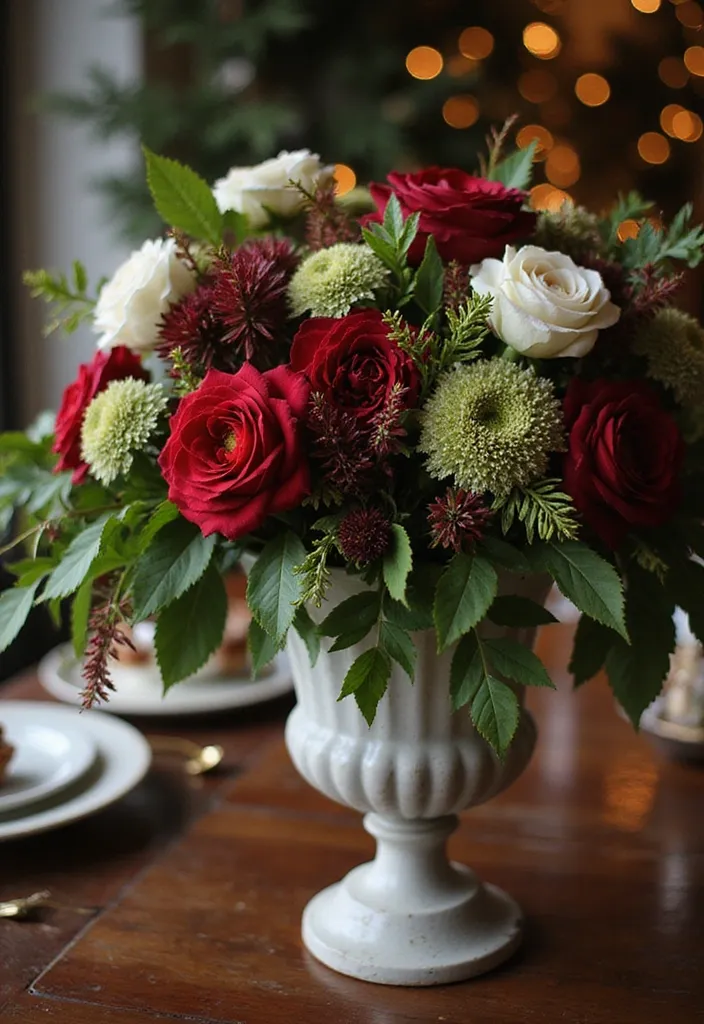
Rooted in Feeling: What Science Reveals About Flowers and the Human Mind
Photo: Shixart1985, CC BY 2.0, via Wikimedia Commons
There is a reason a single stem of garden roses placed on a kitchen table can transform an ordinary Tuesday morning. It is not sentiment alone, nor mere habit. Decades of research across environmental psychology, neuroscience, and behavioral design have begun to articulate what flower lovers have always known intuitively: botanical elements communicate directly with the human nervous system, shaping mood, cognition, and emotional resilience in measurable ways.
At Tierra Floral Design, our work begins with beauty — but it does not end there. Every arrangement we compose, every event installation we conceive, is grounded in the understanding that plants and flowers are not passive décor. They are active participants in the environments we inhabit.
The Rutgers Connection: Research That Changed Everything
In 2005, researchers at Rutgers University published a landmark study demonstrating that receiving flowers produced immediate, positive emotional responses in participants — responses that persisted for days. Participants who received floral gifts reported elevated mood, reduced anxiety, and an increased sense of social connection compared to those who received non-botanical gifts. Critically, these were not fleeting reactions. Researchers observed what they termed "long-term positive mood" that extended well beyond the initial moment of receiving the blooms.
Subsequent studies reinforced these findings in workplace settings. Employees who worked in environments enriched with flowering plants demonstrated measurably higher levels of creative ideation, improved concentration, and lower self-reported stress. The presence of botanicals, it turns out, is not a luxury indulgence — it is an evidence-based design strategy.
Color Theory in Full Bloom
Not all floral arrangements exert the same psychological influence. Color is among the most powerful variables in botanical design, and understanding its psychology allows designers — and homeowners — to curate spaces with intention.
Warm tones, such as the deep corals found in garden roses or the vivid saffron of marigolds, stimulate energy and sociability. These hues activate the sympathetic nervous system at low levels, producing a gentle alertness that makes them ideal for dining rooms and entertaining spaces. Florists who understand this principle use warm-palette centerpieces to encourage conversation and a sense of welcome abundance.
Cool tones — the lavender of sweet peas, the pale blue of hydrangeas, the silver-green of eucalyptus — operate differently. These shades are associated with parasympathetic activation: the body's rest-and-recover response. Arrangements built around cool, desaturated palettes are exceptionally well-suited to bedrooms, home offices, and meditation spaces where calm concentration is the goal.
White florals occupy a particularly nuanced position. Rather than neutrality, white blooms — gardenias, white ranunculus, paperwhites — tend to evoke clarity and mental spaciousness. Environmental designers frequently deploy white-dominant arrangements in spaces where decision fatigue is a concern, allowing the visual field to breathe without stimulating additional cognitive load.
The Invisible Language of Scent
Beyond visual impact, botanical arrangements engage the olfactory system in ways that bypass conscious thought entirely. The human nose connects directly to the limbic system — the brain's emotional processing center — through the olfactory bulb, making scent one of the most immediate and unfiltered pathways to emotional experience.
Lavender's well-documented anxiolytic properties have been confirmed in clinical settings, with studies showing measurable reductions in cortisol levels following exposure to lavender scent. Jasmine has been linked to improved alertness and a reduction in nervous tension simultaneously — a combination that makes jasmine-scented arrangements particularly valuable in home workspaces. Rose fragrance has demonstrated associations with positive memory recall, making it a powerful choice for spaces designed around hospitality and connection.
At Tierra Floral Design, we consider scent a fundamental design element rather than an afterthought. When composing arrangements for private residences or event installations, we work with clients to identify not only the visual palette they desire, but the olfactory atmosphere they wish to create. A dinner party centerpiece might incorporate garden roses and sweet peas for their romantic fragrance; a home office refresh might lean toward eucalyptus and mint for their clarifying, energizing properties.
Biophilic Design: The Deeper Framework
The scientific community has increasingly organized these findings under the umbrella of biophilic design — a design philosophy rooted in the concept that human beings possess an innate affinity for living systems and the natural world. Coined by biologist E.O. Wilson in 1984, the term "biophilia" describes what Wilson identified as humanity's evolutionary bond with nature, a bond so deep that its disruption produces measurable psychological strain.
Modern biophilic design applies this principle to the built environment, arguing that spaces incorporating natural materials, organic forms, living plants, and botanical elements produce demonstrably better outcomes for occupants — in terms of stress reduction, productivity, creativity, and even physical health metrics such as blood pressure and immune function.
Floral design sits at the heart of accessible biophilic practice. Unlike structural architectural changes, botanical arrangements can be introduced, updated, and refreshed with relative ease, allowing homeowners and businesses to maintain living connections with the natural world without renovation. This is precisely why Tierra Floral Design approaches every commission as an act of environmental curation: we are not simply placing flowers in a vase. We are engineering a living experience.
Spatial Principles for Botanical Placement
Understanding the psychology of floral design extends to where arrangements are positioned within a space, not merely what they contain. Environmental psychologists note that placing botanical elements at or near eye level — whether seated or standing — maximizes their psychological impact, keeping them within the natural visual field rather than relegating them to peripheral awareness.
Entrance halls and transitional spaces benefit enormously from botanical presence. Research on "prospect and refuge" in environmental psychology suggests that humans feel most secure in spaces that offer visual richness at points of transition — doorways, hallways, and thresholds. A well-composed arrangement at an entryway does not merely greet guests; it signals safety, abundance, and care before a single word is spoken.
In open-plan offices and co-working environments, clustered botanical installations — rather than isolated single arrangements — have been shown to create psychological "anchors" that help occupants orient themselves emotionally within otherwise undifferentiated space. These anchors reduce cognitive overstimulation and provide what researchers describe as "restorative microenvironments" within larger, more demanding settings.
Bringing the Research Home
The practical implications of this research need not be daunting. Incorporating mood-supportive botanical elements into daily life can begin modestly and evolve with intention. A rotating selection of locally grown seasonal blooms from a farmers' market — changed weekly to maintain novelty and visual interest — is among the most cost-effective and scientifically supported investments in home wellbeing available.
For those designing a home workspace, a small arrangement of eucalyptus, lemon verbena, or rosemary near the desk introduces clarifying scent alongside visual relief from screen fatigue. For bedroom environments, a bedside arrangement of white freesia or pale lavender-toned lisianthus can support the transition toward restful sleep.
At the scale of event design, these principles become even more powerful. When botanical installations are composed with psychological intention — color palettes calibrated to the emotional arc of an evening, scent profiles chosen to encourage openness and connection — guests experience something they often struggle to name but never forget: the feeling that a space was designed with genuine care for how they would feel within it.
That, at its core, is what botanical artistry offers. Not decoration, but experience. Not beauty for its own sake, but beauty in service of the living, feeling human being.