After the Last Petal Falls: How Elite Designers Are Studying Floral Decay to Elevate Their Craft
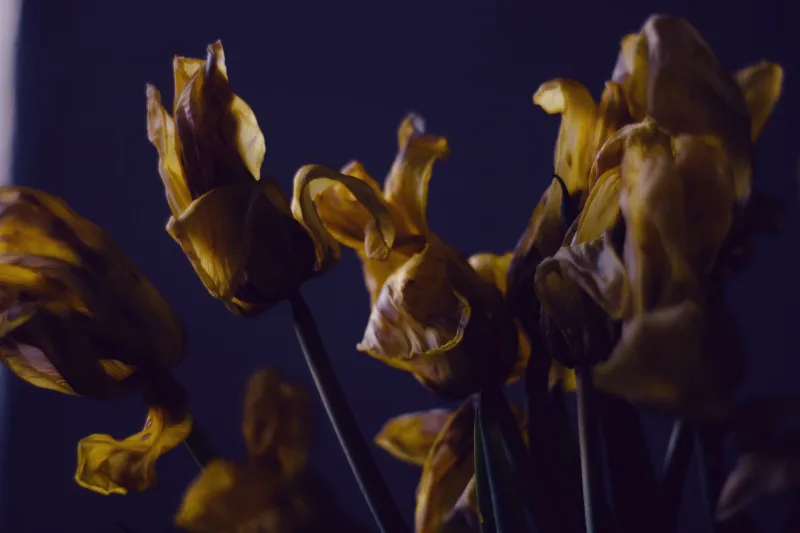
There is a particular moment, familiar to anyone who has worked seriously with botanicals, when an arrangement begins its slow departure from peak form. A ranunculus loosens at the collar. A garden rose drops its outer petals in a quiet cascade. The structured geometry of a freshly composed vase gives way to something more organic, more honest—and, as a growing number of elite floral designers are discovering, more instructive than almost anything that comes before it.
Across the United States, a quiet methodological shift is taking place within the upper echelons of botanical design. Practitioners who have long defined their craft by the perfection of the initial composition are now extending their professional attention well past that opening flourish, studying the full arc of an arrangement's life with the same rigor once reserved for its construction. This practice—part design analysis, part contemplative discipline—is beginning to reshape how botanical work is conceived, executed, and ultimately understood.
The Arrangement as a Living Document
To observe a floral arrangement in decay is not, in the view of its most thoughtful practitioners, to witness failure. It is, rather, to read a document that has been written in real time—one that records the consequences of every compositional decision made at the outset.
Which stems held their structure longest? Which color combinations deepened and enriched as petals aged, and which grew discordant under the same conditions? Where did the eye travel once the dominant blooms receded, and did the supporting elements—the foliage, the filler, the vessel itself—prove strong enough to carry the composition forward? These are questions that cannot be answered at the moment of delivery. They can only be answered over days, sometimes weeks, of careful observation.
For designers working at the intersection of botanical artistry and interior styling, this temporal dimension carries particular weight. An arrangement placed in a client's home on a Monday will look categorically different by the following weekend. The question of how it ages—whether it does so with a kind of sculptural grace or a rapid, ungainly collapse—is inseparable from its overall success as a design object.
Dissecting the Decay: What Designers Are Actually Looking For
The methodology varies from practitioner to practitioner, but certain analytical threads appear consistently among those who have formalized this approach.
Color evolution is among the most closely studied phenomena. Many blooms undergo significant chromatic transformation as they age—deepening toward burgundy, softening toward blush, or developing an almost translucent quality at the petal's edge that was entirely absent at full bloom. Designers who document these transitions with photography or written notation find themselves building a more nuanced understanding of how color behaves over time, rather than simply at the moment of purchase.
Structural collapse patterns reveal the load-bearing logic—or its absence—within a given composition. An arrangement that relies too heavily on a single dominant stem for its visual architecture will often falter dramatically when that stem begins to decline. Designs with distributed visual weight, by contrast, tend to age more gracefully, shifting in character without losing coherence entirely. Studying the sequence in which a composition breaks down is, in effect, a reverse-engineering of its structural principles.
Combination compatibility is another critical area of inquiry. Not all botanicals age at the same rate, and the pairing of long-lasting stems with highly perishable ones can produce a final aesthetic that neither the designer nor the client anticipated. Observing which combinations harmonize through their respective decline cycles—and which produce visual dissonance as they age apart—informs future pairing decisions in ways that no amount of theoretical study can replicate.
The Meditative Dimension
It would be a mistake to treat this practice as purely technical. Many of the designers who have adopted post-arrangement analysis as a regular discipline speak of it in terms that extend well beyond craft refinement.
There is, in the act of watching something beautiful surrender to time, a quality of attention that most professional environments rarely demand. The floral designer who returns to an arrangement on its fourth day, its seventh, its tenth—who resists the urge to discard and instead chooses to observe—is engaging in a form of sustained presence that has meaningful resonance with broader mindfulness traditions.
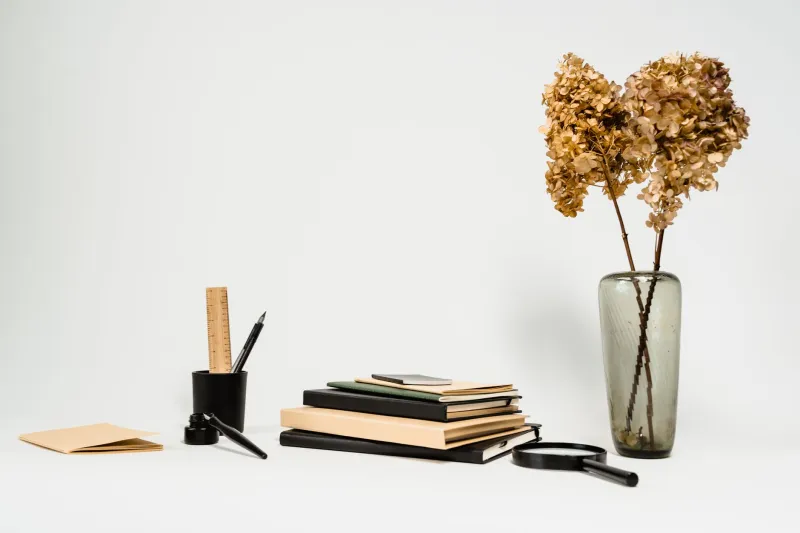
In a design culture that places enormous premium on the pristine, the newly installed, and the perfectly photographed, this willingness to sit with imperfection carries a quiet countercultural weight. It insists that the arrangement's value is not exhausted at the moment it is most conventionally beautiful. It suggests, instead, that something worth knowing exists in every subsequent stage—right through to the dried stem and the fallen petal on the table's surface.
For many practitioners, this orientation has begun to influence not only how they design, but how they communicate with clients about the nature of botanical work itself.
Translating Observation Into Practice
The practical applications of this analytical approach are considerable. Designers who maintain detailed records of arrangement aging—through photography, journaling, or structured notation systems—develop what might be described as a decay library: a curated body of knowledge about how specific botanical combinations behave across their full lifespan under varying environmental conditions.
This library informs decisions at every stage of the design process. A designer preparing an arrangement for a five-day corporate installation will draw on documented knowledge of which combinations have proven most durable. One composing a centerpiece for a weekend wedding will think differently about color evolution, selecting blooms whose chromatic transformation will enhance rather than undermine the visual narrative across the event's duration.
Environmental variables—light levels, humidity, the proximity of heating and cooling systems—are increasingly factored into these assessments as well. A composition that ages beautifully in the cool, north-facing rooms of a historic New England property may behave entirely differently in the sun-saturated interiors of a California coastal home. Understanding these distinctions requires exactly the kind of patient, longitudinal observation that the post-arrangement methodology demands.
A More Complete Craft
What distinguishes the designers who have embraced this approach is not merely technical sophistication, though that is certainly present. It is a fundamental reorientation toward botanical work as something that unfolds through time rather than existing as a single, static event.
This is, in many respects, a more honest relationship with the material. Flowers are not objects. They are processes. They arrive in a state of becoming and they depart in a state of having been—and the full meaning of any arrangement lives somewhere in that entire arc, not only at its most photogenic peak.
For the design-conscious professional willing to follow an arrangement all the way to its conclusion, the rewards are considerable: a deeper command of the material, a more refined compositional instinct, and a practice grounded not only in beauty, but in a genuine understanding of what beauty, at its most complete, actually requires.