The Invisible Room: How Scent-Paired Botanicals Are Becoming the New Language of Interior Atmosphere
There is a moment, familiar to anyone who has entered a room designed with genuine mastery, when something shifts before the eye has fully registered its surroundings. The light, perhaps. The proportion of objects. And then — unmistakably — the air itself. That invisible layer, so often left to chance in even the most carefully curated interiors, is now the subject of serious creative inquiry among America's most forward-thinking botanical designers.
The practice of layering fragrance into botanical room narratives is not new in the abstract sense. Perfumers have long understood scent as architecture. What is new — and what is rapidly gaining traction among design-conscious consumers from the Pacific Northwest to the coastal South — is the deliberate marriage of living floral composition with olfactory intention, treated not as accent but as equal partner in the spatial experience.
Fragrance as Structural Element
When designers speak of fragrance as an architectural element, they are not speaking metaphorically. In the same way that a structural beam defines the negative space of a room, a botanical scent profile defines the emotional register a visitor enters upon crossing a threshold. The distinction between a room that smells pleasantly of flowers and a room whose scent has been intentionally composed is precisely the distinction between decoration and design.
Consider the difference in approach: a conventional arrangement might include garden roses because they are beautiful, seasonal, or appropriate to a color palette. A scent-forward botanical design, by contrast, begins with a question — what should this room feel like? From that answer, a fragrance architecture is constructed first, and the visual composition follows as its visible expression.
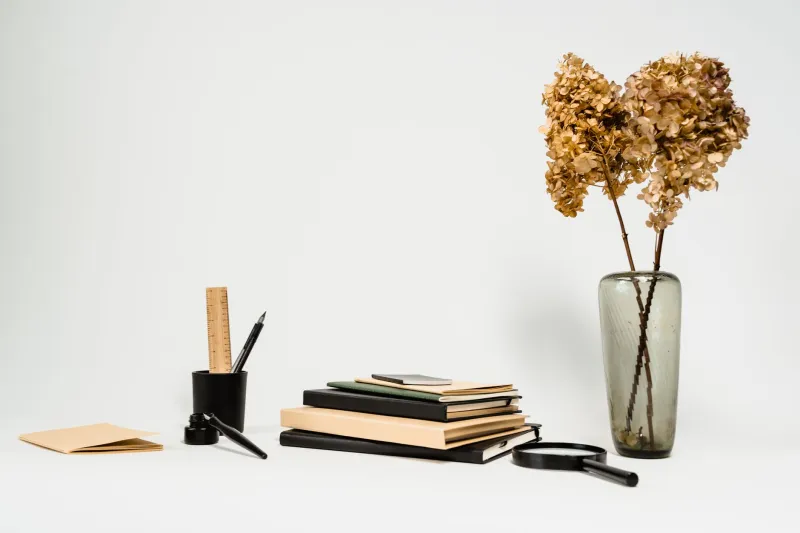
This methodology is finding particular resonance in residential interiors, where homeowners are increasingly seeking spaces that feel psychologically coherent rather than merely aesthetically pleasing. A morning room, for instance, might be designed around the clean, green volatility of lily of the valley and cut stems of eucalyptus, evoking alertness and clarity. A library or reading room might draw on the darker, more resinous qualities of dried botanicals — aged cedar, pressed herbs, the faint sweetness of dried lavender — to encourage the kind of contemplative stillness that reading demands.
Memory, Mood, and the Olfactory Imagination
The science underlying this practice is well-established, even as its design applications remain exploratory. The olfactory system maintains a uniquely direct relationship with the limbic system, the region of the brain most closely associated with emotion and memory formation. Unlike visual or auditory stimuli, scent bypasses the thalamic relay and arrives at emotional processing centers with remarkable immediacy. This is why a single fragrance can transport a person across decades with a speed that no photograph can match.
Designers who understand this neurological reality are, in effect, composing emotional scores for their spaces. A botanical arrangement placed at the entry of a home is not merely a greeting — it is an olfactory declaration, setting the emotional key in which all subsequent experiences within that space will be interpreted. The implications for event design, hospitality, and high-end residential work are profound.
For design-conscious Americans who have already committed to botanical interiors as an expression of identity and aesthetic values, this dimension adds a layer of intentionality that resonates deeply. These are consumers who understand that a home is not a backdrop but a composition — and they are beginning to understand that composition extends into the invisible register of scent.
The Practice of Olfactory Pairing
In practical terms, the work of scent-pairing botanicals requires a designer to think simultaneously in two sensory vocabularies. Visual composition — form, color, texture, scale — remains essential. But alongside it runs a parallel consideration: what does this material release into the air, and how does that invisible output interact with the other olfactory elements present in the space?
Living botanicals are, by nature, dynamic olfactory performers. A peony that opens fully over three days will shift its scent profile as it does so — tighter and more green in bud, fuller and more powdery at peak bloom, finally settling into something softer and more diffuse as it declines. A designer who accounts for this progression is essentially writing a scent narrative with a beginning, middle, and resolution — a composition that unfolds in real time within the room it inhabits.
This temporal dimension separates botanical scent design from the more static world of candles or diffusers, which deliver a fixed fragrance profile regardless of season, time of day, or the particular character of a given week. Living botanicals breathe, shift, and respond to their environment, making the olfactory experience they produce genuinely alive in a way that synthetic fragrance cannot replicate.
Dried and preserved botanicals offer a different kind of olfactory contribution — quieter, more constant, and often evocative of a different emotional register. The soft, warm persistence of dried chamomile, the papery sweetness of preserved peonies, the faintly smoky quality of certain dried grasses — these are the long notes of a botanical composition, providing a stable foundation beneath the more volatile expressions of fresh material.
Designing for the American Home
For American homeowners approaching this practice for the first time, the entry point need not be complex. The most effective scent-paired botanical environments often begin with a single, honest question: what do I want to feel in this room?
From that answer, a conversation with a skilled botanical designer can produce a surprisingly coherent framework. A living room designed for weekend gathering might center on the convivial warmth of garden roses, stock, and sweet pea, materials that release a full, generous fragrance that rewards proximity and invites lingering. A home office seeking to balance creativity with focus might pair the clarity of fresh-cut herbs — rosemary, mint, lemon thyme — with the grounding presence of a low, dense arrangement of foliage that offers visual stillness alongside its quiet olfactory contribution.
The key insight, shared by designers working at the intersection of fragrance and botanical art, is that the goal is not to perfume a room but to compose it. The distinction is essential. Perfuming implies covering or enhancing; composing implies building something coherent from intention outward.
An Emerging Fluency
What is perhaps most compelling about this emerging practice is the fluency it demands — and the fluency it cultivates. Homeowners who begin to think about their botanical spaces in olfactory terms develop, over time, a more nuanced sensory awareness of their own environments. They begin to notice what a room communicates before a single word is spoken, and to understand that they have always been broadcasting a scent identity, whether intentionally or not.
The design-conscious American consumer who engages with this practice is, in a very real sense, claiming authorship of an experience that most people leave entirely to chance. That act of authorship — invisible, intimate, and entirely personal — is perhaps the most sophisticated expression of botanical design available today.
At Tierra Floral Design, the belief has always been that botanical artistry extends beyond what the eye can see. The invisible room, composed in fragrance as deliberately as any gallery installation, is simply that belief carried to its fullest and most resonant conclusion.