Beyond Sorry: How Thoughtfully Designed Botanical Arrangements Are Redefining the Language of Repair
There is a particular inadequacy to the standard apology. Whether delivered through a hastily chosen gift card, a box of chocolates selected from a drugstore shelf, or a text message composed in under thirty seconds, the conventional gesture of repair has grown increasingly insufficient for a generation that values intentionality above almost everything else. For design-conscious Americans — those who approach their homes, their wardrobes, and their social rituals with the same editorial eye — the apology has become a design problem in need of a design solution.
The answer, for many, has arrived in the form of botanical artistry.
The Psychology Behind Floral Repair
Floral gifting has carried emotional weight for centuries, but its role in conflict resolution is experiencing a quiet and sophisticated renaissance. Researchers in environmental psychology have long documented that exposure to living botanicals reduces cortisol levels and activates regions of the brain associated with trust and receptivity. What this means in practical terms is that the person receiving a thoughtfully arranged bouquet is, on a neurological level, more physiologically open to reconciliation than one receiving a conventional gift.
But the design-conscious sender is not simply relying on biology. They are making deliberate choices — about color, form, botanical symbolism, and presentation — that collectively communicate something far more layered than a store-bought substitute ever could. The arrangement becomes a kind of visual letter, one that honors the recipient's aesthetic intelligence while signaling the sender's own emotional investment.
This is precisely the territory that distinguishes a botanical apology from a floral transaction. One is purchased; the other is composed.
The Commission as Emotional Brief
For floral designers who work at the intersection of artistry and occasion, apology commissions have become among the most intimate and revealing projects in their practice. Unlike a wedding centerpiece or a corporate installation, an apology arrangement arrives with a deeply personal brief — one that requires the designer to translate complex relational dynamics into botanical form.
Clients come with stories. A long-deferred acknowledgment between adult siblings. A professional slight that fractured a creative partnership. A moment of carelessness that wounded a close friend. Each situation carries its own emotional texture, and the designer's task is to listen before they ever reach for a stem.
The conversation typically begins not with flowers but with questions. What is the nature of the relationship? What does the recipient value aesthetically? Is the gesture meant to be understated or expressive? Should the arrangement feel like an outstretched hand or a quiet act of contrition? These distinctions matter enormously, because the wrong botanical vocabulary — however beautiful — can inadvertently communicate the wrong emotional register.
Reading the Botanical Vocabulary
For those unfamiliar with the nuances of floral symbolism, the idea that bloom selection carries emotional specificity may seem esoteric. In practice, however, it is both accessible and deeply resonant once understood.
White flowers — ranunculus, garden roses, sweet peas — have long been associated with sincerity, humility, and new beginnings. They communicate an absence of ego, a willingness to begin again without conditions. In an apology context, they function as a visual exhale.
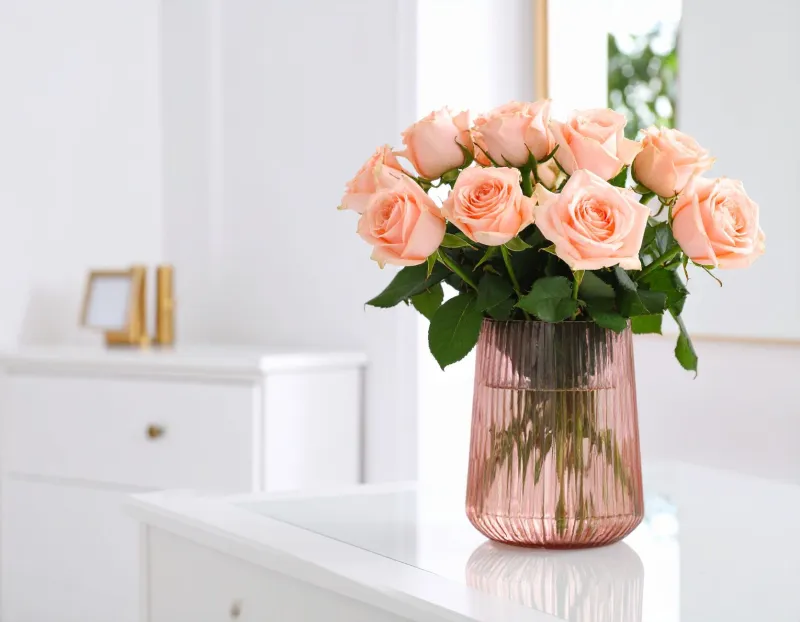
Soft blush tones carry a different register: tenderness, vulnerability, an acknowledgment of emotional sensitivity on both sides. A blush peony arrangement, loosely gathered and presented in a matte ceramic vessel, reads very differently from a tight, structured red rose arrangement, which — despite its cultural ubiquity — can inadvertently project intensity rather than contrition.
Greenery, often underestimated, plays a structural and symbolic role as well. The inclusion of eucalyptus, olive branches, or trailing ivy suggests continuity, rootedness, and a desire to preserve rather than sever. These botanical choices are not accidental; they are the vocabulary of a designer who understands that every element within an arrangement contributes to its overall emotional meaning.
The Vessel as Statement
If the blooms are the words of a botanical apology, the vessel is the tone of voice. A rigid, formal arrangement in a crystal vase communicates something fundamentally different from the same flowers gathered loosely in a hand-thrown ceramic or wrapped in kraft paper with a length of undyed linen ribbon.
The design-conscious sender pays close attention to this distinction. Overly formal presentation can feel performative — more concerned with the impression of the gesture than with the emotional reality of the recipient. By contrast, a vessel that reflects the recipient's personal aesthetic signals genuine attentiveness. It says: I know you. I considered you before I considered myself.
This is, in many ways, the core principle of the botanical apology. It is an act of design that places the recipient at the center of every decision.
Presentation and the Art of Delivery
How an arrangement arrives matters as much as what it contains. A botanical apology left on a doorstep without context carries a different weight from one delivered in person, accompanied by a handwritten note composed with the same care as the arrangement itself. In an era of digital communication, the physical act of writing by hand has become its own form of design statement — one that signals deliberateness in a landscape saturated with convenience.
Some designers recommend pairing the arrangement with a single, unadorned card bearing only a few words — not a paragraph of explanation, but a distillation. The botanical arrangement has already communicated the complexity. The note need only confirm the intention.
For those navigating particularly delicate relational terrain, the timing and location of delivery also merit consideration. A workplace delivery, however beautiful, may not create the private, receptive space that repair requires. A home delivery, timed thoughtfully, invites a more personal encounter with the gesture.
When Design Becomes Care
Ultimately, what separates the botanical apology from its conventional counterparts is the quality of attention it represents. In a culture that prizes speed and convenience, choosing to commission or compose an arrangement that requires research, conversation, and genuine consideration of another person's inner world is itself a form of care.
For the design-conscious American, this is not a trivial distinction. The objects and gestures that populate a well-considered life are chosen because they reflect values — of beauty, of intentionality, of respect for the people who inhabit that life alongside us.
A botanical arrangement composed with these values in mind does not merely apologize. It demonstrates, through the language of living things, that the relationship being repaired is worth the full weight of one's attention.
That, in the end, may be the most eloquent sorry of all.