Growing Minds: How Flower Arranging Cultivates Design Intelligence in Children
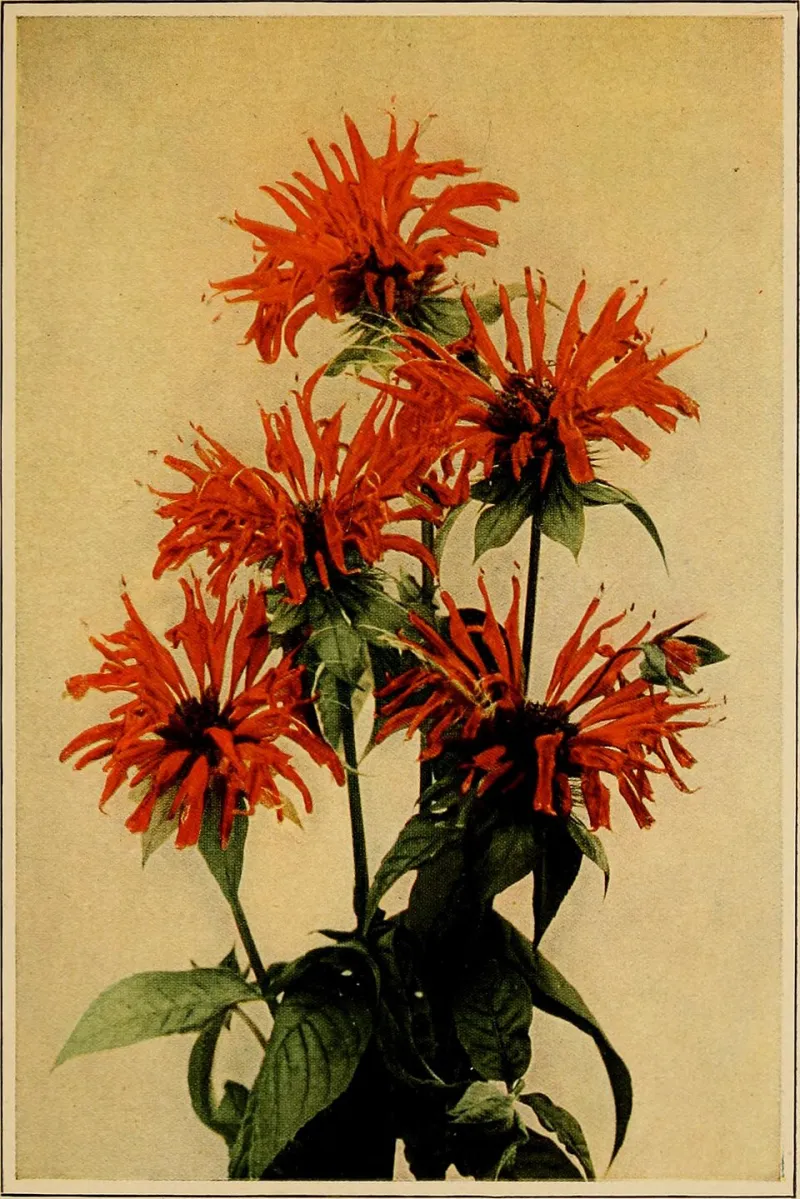
Photo: Internet Archive Book Images, No restrictions, via Wikimedia Commons
There is a moment, familiar to anyone who has watched a child arrange flowers for the first time, when something shifts. The hand that reaches tentatively for a stem of ranunculus, unsure of where it belongs, begins to move with a quiet authority. A decision is made — this color here, that height there — and a small but genuine act of design thinking has occurred. It is a moment that design educators and attentive parents across the United States are increasingly recognizing as far more significant than it first appears.
Flower arranging, long regarded as a domestic art or a professional craft, is finding new relevance as an educational practice for children. At its core, it is an exercise in making considered choices within a set of natural constraints — and that, as it turns out, is precisely the kind of thinking that builds design literacy from an early age.
The Design Principles Hidden Inside Every Arrangement
When a child selects flowers for an arrangement, they are navigating a surprisingly sophisticated set of visual principles. Color relationships, proportion, balance, rhythm, and focal point are not abstract concepts in this context — they are immediate, tactile realities. A stem placed too far to one side creates visible tension. Two clashing hues placed side by side produce a reaction the child can feel before they can articulate why.
Melissa Hartwell, an elementary art educator based in Portland, Oregon, has incorporated seasonal botanical exercises into her curriculum for several years. "What I find remarkable," she notes, "is how quickly children develop an intuitive understanding of visual weight. They may not yet have the language for it, but they know when something feels wrong, and they know how to fix it. That instinct is the beginning of genuine design thinking."
This intuitive calibration — the ability to perceive and respond to visual harmony — is precisely what design professionals spend years cultivating. Introducing it through botanical work in childhood allows that sensibility to develop organically, rooted in experience rather than instruction.
Spatial Reasoning and the Three-Dimensional Canvas
Unlike drawing or painting, floral arrangement asks children to think in three dimensions. The arrangement occupies space; it must be considered from multiple angles. A bloom that reads beautifully from the front may create an awkward silhouette from the side. Managing this spatial complexity engages the same cognitive processes that underlie architectural thinking, engineering, and mathematical reasoning.
Dr. Carolyn Voss, a developmental psychologist who consults with arts education programs in the Chicago area, points to this three-dimensionality as one of the most underappreciated benefits of botanical work with children. "Spatial reasoning is a foundational cognitive skill, and it is one that many children do not get sufficient opportunity to develop through conventional academic activities," she explains. "Working with flowers in a vase — rotating it, adjusting heights, thinking about negative space — is a genuinely rich spatial exercise."
For children who are kinesthetic learners, the physical engagement of botanical design offers something that worksheets and screens simply cannot: the experience of shaping a real object in real space.
Color Theory Made Tangible
Color education in most school settings is largely theoretical. Children learn the color wheel; they may mix paint. But the application of color relationships to a composed, three-dimensional object is a different kind of learning entirely. Flower arranging offers a natural laboratory for exploring harmony, contrast, analogous palettes, and the emotional resonance of color — all through direct sensory experience.
Parents who have introduced botanical activities at home frequently describe a kind of color awakening in their children. Jennifer Alvarado, a mother of three in Austin, Texas, began holding monthly flower-arranging sessions with her daughters after noticing that her eldest was struggling to make confident visual decisions in her artwork. "Within a few months," Alvarado recalls, "she started talking about colors differently — not just naming them, but describing how they made her feel, which ones felt energetic together, which ones felt calm. That vocabulary transferred directly into her other creative work."
This transference is not incidental. When children develop color fluency through a medium as immediate and forgiving as florals, they build a foundation that enriches every subsequent visual endeavor — from the way they eventually arrange a room to the way they might one day design a brand.
Aesthetic Confidence and the Permission to Decide
Perhaps the most enduring gift that botanical design offers young learners is something less measurable but deeply consequential: aesthetic confidence. In an era when children's creative choices are often guided toward a correct answer, flower arranging presents a genuinely open field. There is no single right arrangement. Preferences are not only permitted — they are the entire point.
This permission to make genuine aesthetic decisions, and to stand behind them, is formative. It cultivates the kind of self-trust that design-conscious adults describe as essential to their creative lives. Children who are regularly invited to exercise their own taste — to choose, to compose, to refine — develop a relationship with their own judgment that serves them far beyond the realm of design.
Hartwell describes watching her students present their arrangements to the class as one of the most revealing moments of the exercise. "They learn to articulate why they made the choices they made. That is not a small thing. Explaining a visual decision in words requires a level of self-awareness and conviction that we work hard to cultivate in young learners."
Bringing Botanical Education Into the American Home
For families interested in introducing this practice at home, the barrier to entry is refreshingly low. A weekly trip to a local farmers' market or grocery store floral section, a simple ceramic vessel, and a pair of child-safe floral scissors are sufficient to begin. The ritual itself — selecting, arranging, displaying — carries as much value as any formal instruction.
Design educators suggest beginning with a limited palette: three to five stems in two or three complementary colors. Constraints, counterintuitively, tend to sharpen creative decision-making. As children grow more confident, the complexity of the palette and the vessel can expand.
Seasonal awareness is another dimension worth nurturing. Encouraging children to notice which flowers are available in spring versus autumn, and why, introduces a layer of botanical literacy that connects design thinking to the natural world — a connection that, at Tierra Floral Design, we consider essential to a truly grounded aesthetic sensibility.
A Foundation for a Design-Conscious Life
The child who learns to arrange flowers is not simply learning a craft. They are learning to see — to notice relationships between colors, to feel the logic of proportion, to trust their own visual instincts. These are the foundations upon which a design-conscious life is built.
In a culture that increasingly values aesthetic intelligence alongside academic achievement, botanical design offers families a meaningful, beautiful, and surprisingly rigorous path toward cultivating young people who move through the world with their eyes fully open. The arrangement on the kitchen table, composed by small and earnest hands, may be among the most elegant classrooms we have.