Beyond Words: How Botanical Design Has Become America's Most Eloquent Form of Nonverbal Communication

Photo by Photo by Franco Debartolo on Unsplash on Unsplash
There is a moment, familiar to anyone who has walked into a thoughtfully designed space, when something shifts before a single word is exchanged. The air holds a particular quality. A carefully composed arrangement occupies the entryway console. A climbing vine frames a window with deliberate intention. Without announcement, the space has already introduced itself. It has already told you something true about the people who live there.
This is the quiet power that botanical design has always possessed—and that American designers and homeowners are now deploying with increasing sophistication. Flowers and living plant installations are no longer passive accessories. They are, in the most considered interiors, a primary medium of communication.
The Shift From Decoration to Declaration
For decades, the floral arrangement occupied a secondary role in American interior design. It softened a room, added color, and signaled a certain domestic care. But the conversation happening in design-forward homes today is considerably more layered. Botanical choices are being made with the same intentionality that one might bring to selecting a piece of art or commissioning a custom furniture piece.
Consider the homeowner in the Pacific Northwest who fills her foyer each week with locally sourced dahlias and native ferns—not because they are the most dramatic blooms available, but because they are the most honest. Her arrangement speaks of rootedness, of environmental consciousness, of a preference for the authentic over the imported. A guest who notices will understand something essential about her values before the first cup of tea is poured.
This is the botanical statement at its most refined: not an announcement, but a revelation.
Hospitality Written in Petals
In American entertaining culture, the act of welcoming guests has long been encoded in physical gestures—the set table, the lit candle, the prepared guest room. Botanical design has emerged as one of the most nuanced of these gestures, capable of communicating warmth in ways that transcend the conventional.
A generous, overflowing arrangement of garden roses and eucalyptus placed at the center of a dining table does not simply beautify the meal. It signals abundance. It says: your presence here is worth this effort. By contrast, a single stem of Japanese anemone in a narrow ceramic vessel communicates something entirely different—a studied restraint, an appreciation for the singular, an invitation to slow down and notice.
Designers who specialize in event and residential installations speak frequently about this communicative dimension. The botanical choices made for an intimate dinner party among close friends differ meaningfully from those made for a formal gathering of professional colleagues—and those differences are felt by guests even when they cannot articulate precisely why. The language is operating below the level of conscious analysis, which is precisely what makes it so effective.
Environmental Values Made Visible
Perhaps nowhere is the communicative power of botanical design more evident than in the growing emphasis on sustainability and ecological awareness. American consumers are increasingly attentive to where their flowers come from, how they are grown, and what their presence in a home signifies about the values of its inhabitants.
The shift toward locally grown, seasonally appropriate blooms is not merely a practical or aesthetic preference—it is a statement. A home that features arrangements built from farmers' market finds, dried native grasses, and foraged branches is making a declaration about its relationship to the natural world. It is refusing the logic of the year-round, globally sourced flower economy in favor of something more honest and more grounded.
This is botanical design as quiet activism. It does not announce itself with a manifesto. It simply exists, beautifully and deliberately, in the room—and allows the observant guest to draw their own conclusions.
Personal Taste as Botanical Vocabulary
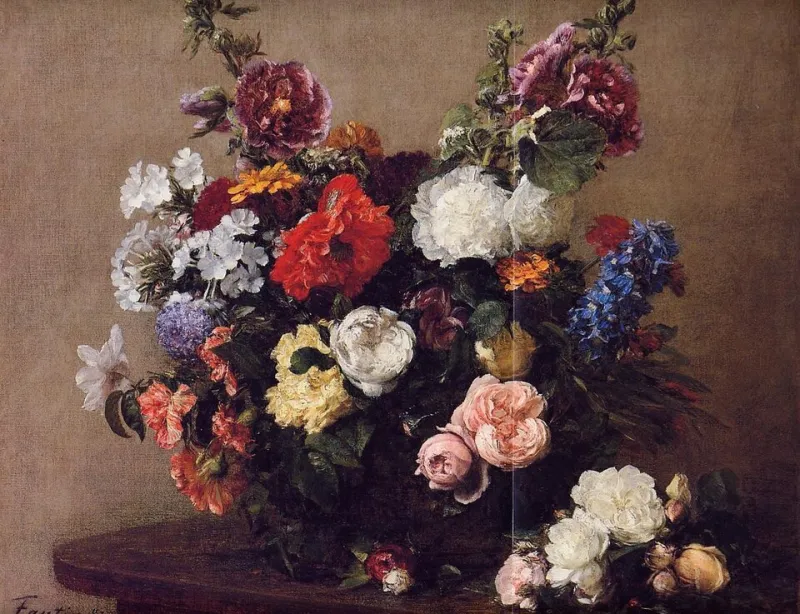
Beyond hospitality and environmental consciousness, the botanical choices that define a space function as an intimate portrait of personal taste. The vocabulary is surprisingly precise. A preference for architectural blooms—protea, anthurium, bird of paradise—suggests a design sensibility drawn to the dramatic and the structural. A home filled with soft, layered arrangements of garden varieties like sweet peas, ranunculus, and lisianthus speaks of romanticism and an appreciation for the delicate.
Colorways carry their own freight. A home that consistently returns to a palette of dusty mauves, aged terra cottas, and warm whites is telling a different story than one that reaches for saturated jewel tones or crisp, high-contrast combinations. Neither is a superior choice—but both are choices, and both communicate.
What is particularly compelling about botanical design as a communicative medium is its temporality. Unlike furniture or architectural decisions, floral arrangements change. They evolve with the seasons, with the occasion, with the emotional tenor of a household. A home that shifts its botanical identity from the spare, sculptural arrangements of winter to the lush, overflowing compositions of midsummer is, in a sense, narrating its own story across time.
Designing Spaces That Speak
For those interested in harnessing this communicative dimension more intentionally, the starting point is reflection rather than acquisition. Before selecting blooms, consider what you wish your space to convey. Is the priority warmth and abundance? Restraint and precision? A connection to place and season? A celebration of color and vitality?
Once that intention is clear, the botanical choices will follow with greater coherence. An entryway arrangement becomes a greeting. A bedroom installation becomes a private declaration of what you find beautiful and restorative. A dining table composition becomes a gesture of welcome extended to every guest who sits down to share a meal.
This is the practice of botanical design at its most meaningful: not the pursuit of the most impressive or the most expensive, but the pursuit of the most true. The arrangement that genuinely reflects the values, sensibilities, and spirit of the space it inhabits will always communicate more powerfully than one assembled for spectacle alone.
The Eloquence of the Considered Arrangement
American design culture is in the midst of a meaningful recalibration. After years of maximalism and trend-driven consumption, there is a growing appetite for spaces that feel genuinely inhabited—that bear the marks of real people with real values and real aesthetic commitments. Botanical design, with its inherent connection to the living world and its capacity for seasonal change, is extraordinarily well suited to this moment.
Flowers have always spoken. What is changing is the degree to which designers, homeowners, and guests are learning to listen. In the most carefully considered spaces, every arrangement is a sentence, every installation a paragraph, and the botanical identity of a home, taken as a whole, is something very close to a philosophy.
The room has been waiting to tell you something. The question is whether you are prepared to hear it.