What Your Flowers Say About You: The Quiet Symbolism of Botanical Choices in the American Home
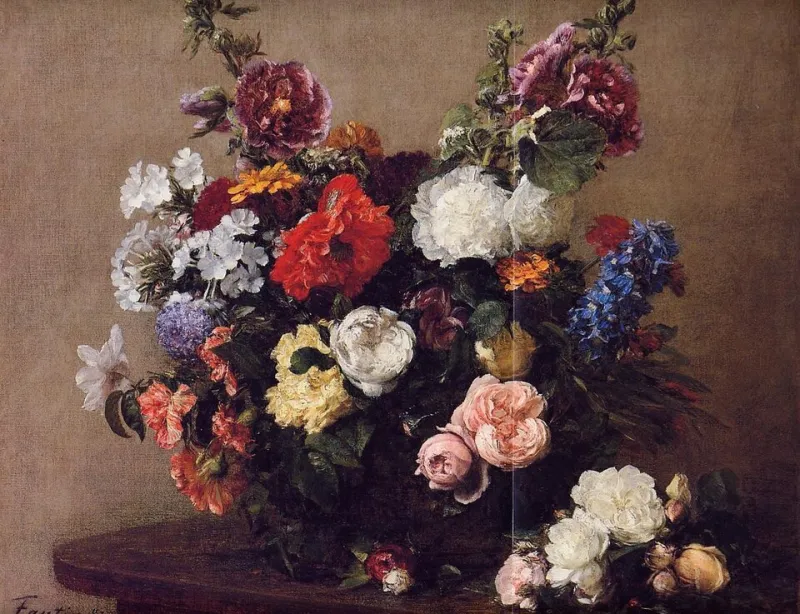
Photo: Henri Fantin-Latour, Public domain, via Wikimedia Commons
There is a particular intimacy in the act of choosing which flowers to bring into your home. Unlike selecting a sofa or a rug, the decision is rarely made through lengthy deliberation or design consultations. It tends to be instinctive—a reaching toward something that resonates on a level that is difficult to articulate. And yet, when examined closely, those instinctive choices form a coherent portrait of who we are, what we value, and how we wish to live.
At Tierra Floral Design, we have long believed that botanical artistry is inseparable from personal identity. The flowers and greenery that populate your interiors are not merely decorative; they are a living vocabulary, communicating your relationship with the natural world, your cultural roots, and even your broader philosophy of consumption.
The Native Plant Devotee: Grounded in Place and Principle
Across the United States, a growing number of design-conscious homeowners are turning exclusively—or nearly so—to native botanical varieties. Black-eyed Susans in a Virginia farmhouse, desert marigolds in an Arizona living room, or wild lupine arrangements in a Pacific Northwest kitchen: these choices speak to something far deeper than regional pride.
The preference for native species signals an acute environmental consciousness. It reflects an understanding that beauty and responsibility are not in opposition—that a flower can be both stunning and ecologically sound. Those drawn to native botanicals tend to embrace slow design principles: the idea that a home should evolve gradually, thoughtfully, and in harmony with its surrounding landscape rather than chasing trends dictated by distant supply chains.
There is also an element of humility in this choice. Native arrangements do not shout for attention. They ask you to look more carefully, to appreciate the texture of a seedpod or the subtle gradation of a prairie bloom. For those who live with them, this is precisely the point.
The Tropical Enthusiast: Warmth, Wanderlust, and Cultural Connection
Conversely, those who fill their spaces with bold tropical specimens—birds of paradise, anthuriums, monstera leaves, or heliconia—are making an equally deliberate statement, though one of an entirely different character. Tropical botanicals carry warmth, abundance, and a certain theatrical confidence. They are unapologetically present.
For many Americans, particularly those with Caribbean, Latin American, or Southeast Asian heritage, the preference for tropical varieties is not merely aesthetic—it is ancestral. Bringing these plants and flowers indoors is an act of cultural continuity, a way of honoring the landscapes and traditions of one's family history. The home becomes a living bridge between here and there, between the present and the remembered.
Even for those without direct tropical heritage, the choice often signals an openness to the world—a design philosophy that embraces color, vitality, and the exuberant generosity of nature in its most abundant form.
Seasonality as Spiritual Practice: The Flower Calendar as a Moral Stance
Perhaps the most telling botanical choice of all is not which flower someone selects, but when they choose it. Those who organize their interiors around seasonal availability—peonies in late spring, dahlias in summer, branches of bittersweet in autumn—are practicing a form of botanical mindfulness that carries significant philosophical weight.
This commitment to seasonality is, at its core, a rejection of the homogenized global flower market, where roses from Ecuador and chrysanthemums from Colombia are available year-round regardless of local growing conditions. Choosing to live with what is blooming now, in your climate and your region, is an act of presence. It is a way of allowing the natural world to set the rhythm of domestic life rather than the other way around.
Design professionals increasingly recognize this approach as one of the most sophisticated expressions of botanical taste—not because rare flowers are unavailable to these clients, but because they have chosen restraint and attunement over abundance.
The Curated Exotics: Rarity, Refinement, and the Collector's Eye
Then there are those whose botanical preferences trend toward the rare and the unusual: proteas sourced from specialty growers, Ecuadorian garden roses in varieties unavailable at any retail florist, or Japanese ranunculus arranged with the precision of a still-life painting. These choices signal a collector's sensibility—an investment in botanical knowledge and a willingness to seek out excellence beyond the conventional.
This disposition often intersects with a broader design philosophy that prizes craftsmanship and provenance. The same person who asks where their flowers were grown likely asks who wove their linen and where their ceramics were fired. For them, the flower is part of an integrated aesthetic and ethical framework, a single thread in a larger tapestry of considered living.
Reading the Room, One Bloom at a Time
What makes botanical language so endlessly fascinating is its capacity for layering. A single arrangement can speak to heritage, environmental values, seasonal awareness, and design sophistication simultaneously. The wildflower bouquet on a Brooklyn dining table might contain locally foraged stems, a nod to a grandmother's garden in Puerto Rico, and a deliberate rejection of the perfectly symmetrical arrangements that dominate social media feeds—all at once.
At Tierra Floral Design, our work begins precisely here: in the conversation between a client's instincts and the deeper meanings those instincts carry. Understanding what draws a person to a particular bloom—its color, its fragrance, its cultural resonance, its ecological footprint—allows us to create spaces that feel genuinely inhabited rather than merely styled.
The flowers you choose are not incidental. They are, in their quiet and perishable way, among the most honest things in your home.