From the Ground Up: Why Provenance-Driven Florals Are Redefining Luxury Design in America
There is a moment, familiar to anyone who has stood in a well-appointed room and felt something ineffable shift in the atmosphere, when a floral arrangement transcends decoration and becomes testimony. It speaks not only to the eye but to a deeper sensibility — one that asks where something came from, how it was grown, and what conditions of soil and sky conspired to produce it. For a discerning generation of American design enthusiasts, that question of origin has become central to how they think about botanicals in the home.
This is the quiet revolution of provenance-driven floral design: a movement that borrows its vocabulary from viticulture and applies it, with remarkable elegance, to the world of flowers.
The Terroir Principle, Translated
Wine lovers have long understood that a grape does not exist in isolation. Its flavor, structure, and character are inseparable from the microclimate, soil composition, and altitude of the vineyard where it was cultivated. The French call this terroir — a word that resists direct translation but gestures toward the idea that place leaves an indelible mark on what it produces.
American florists and botanical designers are now applying this same logic to their sourcing practices. A peony grown in the cool, mineral-rich soils of the Willamette Valley in Oregon does not merely resemble a peony grown under the greenhouse lights of a mass-production facility in South America. It possesses a distinct stem strength, a particular depth of color, and a fragrance profile shaped by its specific environment. These are not abstract distinctions. To a trained eye — and an educated client — they are immediately perceptible.
Leading designers across the country are beginning to communicate this difference explicitly. Rather than presenting a client with a bloom and naming only its variety, forward-thinking florists now offer what might be called a provenance narrative: the farm's name, the growing region, the approximate harvest date, and the conditions that shaped the plant's development. This level of transparency, once reserved for artisan food markets, has migrated into the floral studio with remarkable speed.
Regional Identity as Design Language
The implications for interior design are significant. When a floral arrangement is composed entirely of botanicals sourced from a specific microclimate zone — say, the coastal fog belt of Northern California, or the high-desert shrublands of New Mexico — it carries an inherent coherence that no amount of stylistic curation alone can manufacture. The colors relate to one another in ways that reflect a shared light environment. The textures bear the marks of similar growing conditions. The seasonal availability imposes a discipline that, paradoxically, liberates the designer.
This regional specificity has become a marker of refined taste among design-conscious Americans who have grown skeptical of the homogenized aesthetic that global supply chains tend to produce. When flowers can be sourced from virtually anywhere at any time of year, the choice to source them from a single valley farm in the Hudson River region, or from a small-batch grower in the Texas Hill Country, becomes a deliberate act of aesthetic and ethical positioning.
It signals an understanding that constraint can be generative — that the limitations of a local growing season, rather than representing a design obstacle, offer an opportunity to create something genuinely irreplaceable.
The Farms Behind the Flowers
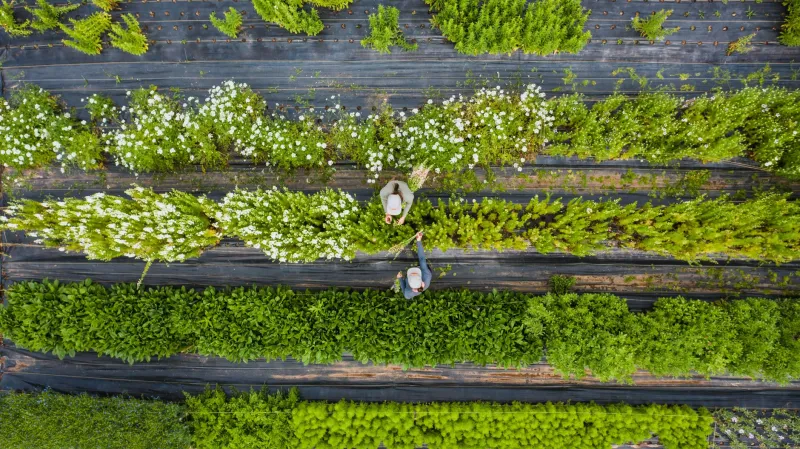
The infrastructure supporting this movement has been quietly expanding for over a decade. The American Grown Flowers initiative has helped connect consumers and trade buyers with domestic growers, many of whom operate on small acreages with a commitment to sustainable practices that larger international operations cannot replicate. From lavender farms in Sequim, Washington, to heirloom dahlia growers in the Finger Lakes of New York, a network of regional producers has emerged that is increasingly capable of supplying the luxury design market with botanicals of extraordinary character.
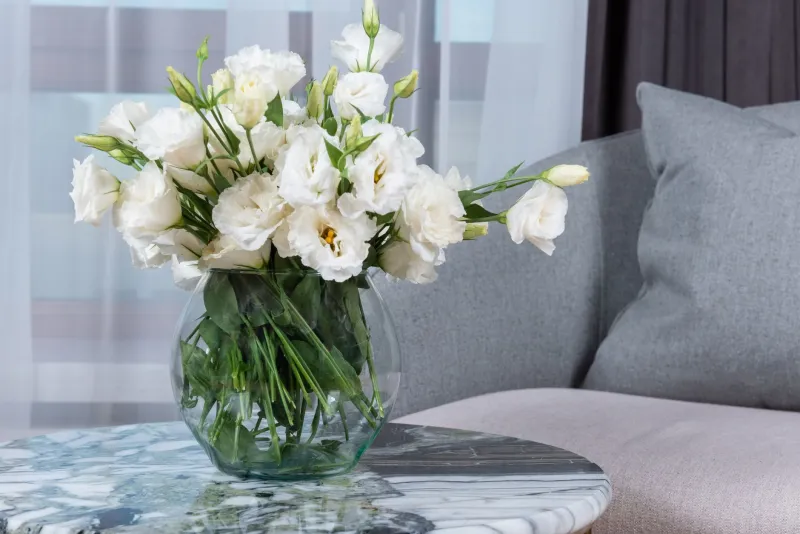
For designers working at the highest levels of the residential and event markets, relationships with these growers have become professional assets of considerable value. The ability to call a farm in the Carolinas and request a specific variety of lisianthus at a particular stage of bloom — and to have that request honored by someone who knows your aesthetic preferences — represents a kind of creative partnership that no wholesale distributor can approximate.
These relationships also introduce an element of seasonal surprise that many designers find creatively invigorating. When you commit to working with what a specific region produces in a given week, you surrender a degree of control in exchange for something more interesting: the unexpected beauty of whatever the land has decided to offer.
Wellness, Rootedness, and the Meaning of Local
The appeal of hyper-local botanicals is not purely aesthetic, however. There is a wellness dimension to this practice that resonates strongly with contemporary American values. Research continues to affirm what intuition has long suggested — that our psychological relationship with the natural world is strengthened when we understand and feel connected to the specific landscapes around us. A bouquet of flowers grown forty miles from your home carries a different emotional weight than one that traveled across three continents to reach your table.
This sense of rootedness — of being connected to the particular ecology of one's own region — has become an increasingly sought-after quality in luxury interiors. Design-conscious clients speak of wanting their homes to feel grounded in place, to reflect not only their personal taste but the character of the landscape they inhabit. Hyper-local botanicals are one of the most immediate and sensory ways to achieve this quality.
At Tierra Floral Design, this philosophy informs every consultation. The question of where a flower comes from is never incidental — it is foundational to the design process, shaping decisions about palette, texture, vessel selection, and the overall emotional register of a finished arrangement.
Cultivating a More Intentional Practice
For those wishing to bring this sensibility into their own homes, the path forward begins with curiosity. Seek out farmers' markets that feature local flower growers. Ask the name of the farm before you purchase. Inquire about what is in season and allow that information to guide your choices rather than defaulting to the familiar. Over time, this practice builds a kind of botanical literacy — an understanding of your region's floral calendar that deepens your appreciation for every bloom you bring indoors.
The most sophisticated design statement, it turns out, is not the rarest or most expensive flower. It is the one whose story you can tell — whose soil you can name, whose season you have learned to anticipate, and whose beauty you recognize as the product of a specific and irreplaceable place on the American earth.