After the Ballroom Lights Dim: Tracing One Event's Flowers From Gala Tables to a Community's Tables
At 11:47 p.m. on a Saturday in October, the last guests filter out of a downtown ballroom in Chicago's West Loop. The band packs its instruments. The caterers break down the buffet. And then the event planners turn to the question that haunts the floral industry: what happens to the flowers?
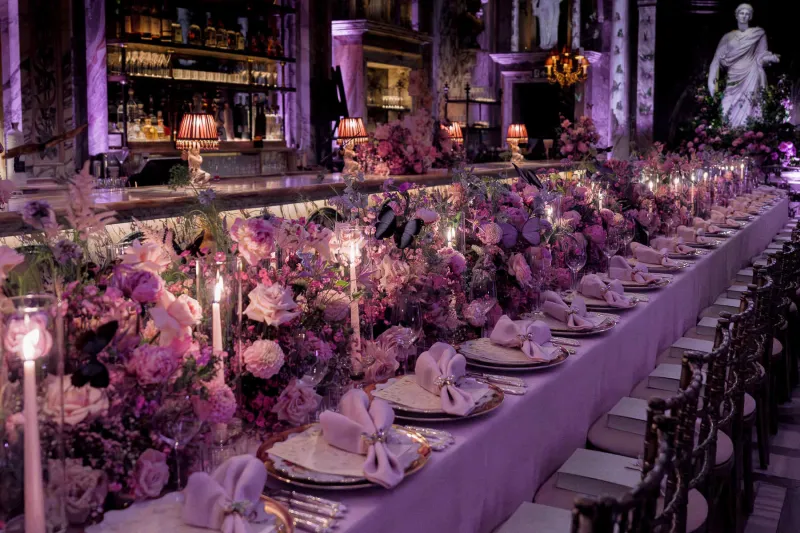
On the tables tonight: forty-two centerpieces of garden roses, dahlias, and trailing amaranth, designed by a studio that charges, by conservative estimate, upwards of $30,000 for the evening's botanical program. Within hours, every stem will begin a journey most guests never consider — one that reveals as much about American values as any toast or speech made in that ballroom.
The Midnight Logistics of Generosity
The logistics of floral aftercare are less romantic than the arrangements themselves. Donation coordinators describe a narrow window: most recipients — hospitals, shelters, senior residences — need flowers delivered within twenty-four hours of an event, before the petals begin to tire.
"It's essentially a second event, planned in reverse," explains one Midwest event producer who has run post-gala donation programs for nearly a decade. "You're doing a full strike — vases, water, transport — but the venue is a memory care facility instead of a ballroom."
The operational challenges are real. Vessels must be collected and returned. Flowers wired into arches and suspended installations cannot simply be handed to a volunteer. And not every organization can accept donations; some hospitals, citing infection-control protocols, decline fresh florals entirely, pushing designers toward alternatives such as staff lounges, hospice suites, or nonprofit partners with more flexible guidelines.
Where the Flowers Go
The destinations vary by city, but the map of floral afterlife in America follows a recognizable pattern:
- Healthcare settings. Hospice programs and long-term care facilities are among the most consistent recipients, where a fresh arrangement can meaningfully alter a patient's daily environment.
- Shelters and community dining rooms. Organizations that serve meals or house families often welcome florals that bring dignity to shared spaces.
- Repurposing services. A growing crop of companies — some nonprofit, some for-profit — now specialize in collecting event flowers and redistributing them, sometimes re-composing arrangements entirely.
- The compost stream. What cannot be donated is increasingly diverted from landfills, where organic matter decomposes without oxygen and produces methane. Composting programs in cities like San Francisco, Seattle, and New York have made botanical waste part of a broader municipal reckoning.
The Ethics of Abundance
Beneath the logistics lies a more uncomfortable conversation. Americans discard an estimated hundreds of millions of pounds of floral waste annually, much of it from events. For an industry built on beauty, the volume of what is thrown away sits uneasily beside the values its clients profess.
Some designers have responded with structural changes rather than afterthoughts. Buyback schemes — in which a designer repurchases or credits back arrangements for reuse — remain rare, but design-forward studios increasingly build the afterlife into the proposal itself: foam-free mechanics that allow arrangements to be disassembled, vessel deposits that encourage return, and contracts that name the donation partner before the first flower is ordered.
"The question isn't whether the flowers were beautiful," one designer notes. "It's whether the design accounted for everything that came after the beauty."
A Second Bloom
By Monday morning, the gala's dahlias sit on the front desk of a women's shelter on the city's South Side. The garden roses have been divided into eleven small arrangements for residents' dining tables. The amaranth — too delicate to survive transport — went to compost, where it will return to soil by spring.
The centerpieces that commanded a ballroom on Saturday now do quieter work: marking a reception desk, brightening a hallway, telling a family in transition that someone, somewhere, thought their table deserved flowers too.
For the design-conscious host, the takeaway is not guilt but intention. The most sophisticated event design now extends past the last dance. It asks, in advance, what the flowers will mean when the party is over — and answers with a plan.
The fleeting nature of florals has always been part of their poetry. What is changing is the refusal to let that fleetingness become waste. In the afterlife of the centerpiece, American event design is discovering its most meaningful arrangement yet.