Before the City Wakes: The Discipline Behind the Dawn Flower Market
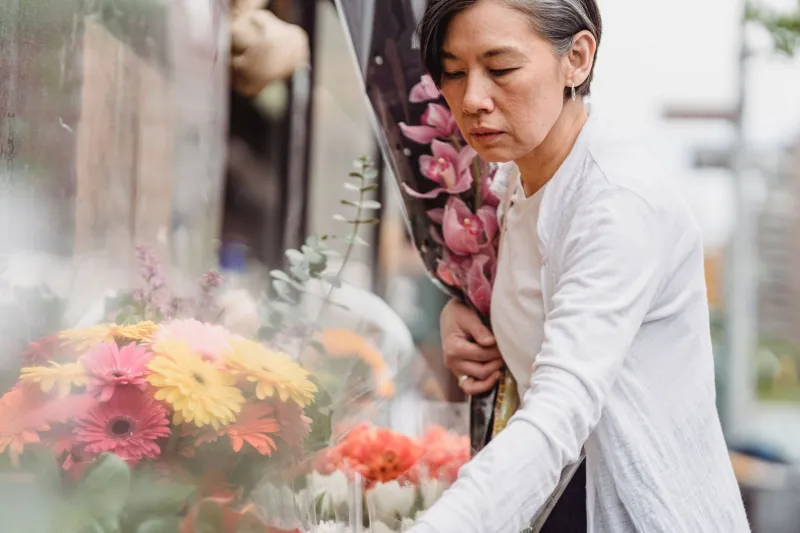
The workday of a boutique floral designer rarely begins at the design table. It begins in the dark, several hours before most of the country has reached for its first cup of coffee, in the sprawling wholesale flower markets where the nation's botanical inventory changes hands before sunrise.
For the design-conscious consumer, a finished arrangement appears fully formed: composed, conditioned, and effortless. What remains invisible is the predawn choreography that made it possible — a ritual of evaluation, negotiation, and physical labor that separates professional botanical artistry from weekend enthusiasm.
The Market Opens Before the Mind Does
At half past four, the market is already operational. Delivery trucks idle at loading docks while vendors unpack buckets of ranunculus, hellebore, anemone, and imported protea under lights that render every color slightly more forgiving than daylight will. Designers move through the aisles with flashlights clipped to jackets, inspecting stems the way a jeweler inspects stones.
The first hour is observational. Petals are drawn back gently to check for bruising. Stems are lifted from their water and examined for bacterial clarity. A hydrangea that looks magnificent under market fluorescents may reveal softness at the petal edge — the early signature of a shortened vase life. Only by handling the material directly can a designer distinguish between a stem that will perform for a week and one that will fade in three days.
This tactile literacy cannot be taught from a catalog. It is accumulated over years of mornings, one disappointing shipment at a time.
Selection as a Design Act
It is tempting to think of the market run as mere procurement, but for serious studios it is the first stage of design itself. The palette of any given day is dictated less by a client's mood board than by what the season has actually delivered.
A designer may arrive intending a palette of blush and cream, only to discover that the local foxglove crop came in unusually deep, or that a grower has a small allocation of chocolate cosmos — a variety so perishable it rarely travels. The most compelling work often emerges from these accidents of availability. Rigid shopping lists produce rigid arrangements.
Experienced designers describe a kind of fluency that develops at market: the ability to read an entire vendor's table in seconds, to identify which buckets were cut yesterday and which have been sitting since the weekend, and to know which growers reserve their best stems for buyers who arrive early and treat the material with respect.
The Unglamorous Middle Hours
What follows the market is the least romantic portion of the craft. Stems must be stripped of lower foliage, cut at an angle under water, and plunged into clean buckets at precise depths. Woody materials like lilac and flowering branches are cross-cut or split to improve uptake. Roses are hydrated for hours before they can be handled without opening prematurely.
Temperature control becomes an obsession. Most cut flowers perform best in cool, dark conditions, which means the studio's back room functions less like an atelier and more like a working cellar. Timing is recalibrated constantly around the event or delivery schedule: peonies purchased tight must be coaxed open; dahlias, notoriously short-lived, are scheduled to peak on a single day.
None of this appears in the final photograph. Yet it is precisely this discipline — the conditioning, the staging, the relentless hygiene of buckets and blades — that allows a design to hold its form through a long evening or a full week in a client's home.
Why the Ritual Matters
There is a broader lesson in the predawn market run, one that extends to anyone who brings flowers into a considered interior. The quality of botanical design is determined upstream of the vase. A stem bought in haste at a grocery store carries its compromises forward; a stem selected at first light, from a grower whose name the designer knows, carries intention.
For the design-conscious, this is worth remembering the next time an arrangement stops conversation at a dinner party. Behind its apparent ease stands an unphotographed sequence: a dark highway at four in the morning, cold hands sorting stems under fluorescent light, and the quiet expertise of someone who has learned to see a flower's future in its present condition.
Botanical artistry, in the end, is only partly about composition. It is equally about logistics — and the professionals who practice it well are up, quite literally, before the bloom.