Planted in Perpetuity: How Ultra-Affluent Families Are Commissioning Botanical Legacies That Outlast Generations
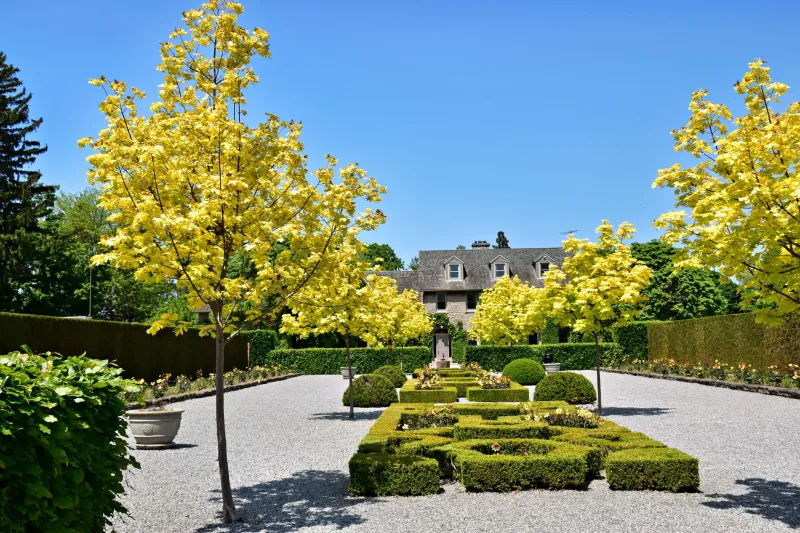
There is a particular kind of wealth that does not announce itself through acquisition alone. It speaks, instead, through time—through the patience to invest in something that will not reach its fullest expression for thirty, forty, perhaps sixty years. In America's most design-conscious private estates, this philosophy has found a new and remarkable expression: the commissioned botanical legacy, a living installation conceived not for the present occupant alone, but for the generations who will walk beneath its canopy long after the original patron has gone.
Floral designers and horticultural artists who once specialized in seasonal arrangements and event installations are now being engaged in an entirely different capacity. They are being asked to think like architects, like archivists, like storytellers whose medium happens to grow.
The Commission as Heirloom
The language surrounding these projects reveals their ambition. Clients do not speak of gardens. They speak of installations. They speak of narratives. In conversations with designers who have undertaken such commissions, a recurring phrase emerges: the botanical signature—a curated, site-specific collection of plants, spatial arrangements, and living structures that function as a family's aesthetic and philosophical imprint upon a piece of land.
Unlike a painting acquired at auction or a sculpture positioned in a foyer, a botanical legacy is not static. It breathes. It responds to rainfall and drought, to the particular quality of light that falls across a given property in late October, to the soil composition that makes one variety of magnolia thrive and another merely survive. This dynamism is, for many clients, precisely the point. They are not purchasing an object. They are initiating a relationship between their family's identity and the natural world—one that will deepen and complicate itself over time in ways no designer can fully predict.
Designing Across Decades
The technical and conceptual demands of such a commission are considerable. A floral designer asked to create a multi-generational botanical installation must think simultaneously across multiple timescales. Which specimens will anchor the composition in the first five years, providing immediate visual coherence while slower-growing elements establish themselves? Which structural plantings—oaks, hornbeams, espaliered fruit trees—will define the spatial architecture of the installation a quarter-century hence? How will the color palette shift as certain flowering species reach maturity and others naturally recede?
Designers working at this level frequently collaborate with landscape architects, arborists, and soil scientists, assembling a kind of botanical design team whose expertise spans disciplines. The floral designer's role within this collaboration is often that of the aesthetic director—the individual responsible for ensuring that the installation, at every stage of its evolution, retains a coherent visual and emotional identity.
Documentation is equally essential. The most thoughtfully executed botanical legacies are accompanied by detailed living records: illustrated planting guides, annotated maps, seasonal care protocols, and written accounts of the design philosophy that informed each selection. These documents, maintained and updated over time, become artifacts in their own right—a secondary layer of the legacy that future family members can consult, honor, or gently revise.
Plant Selection as Autobiography
Perhaps the most intimate dimension of these commissions is the process of plant selection itself. Designers report that the conversations required to arrive at a final botanical palette are among the most revealing they have ever conducted with clients. Which species carry personal meaning—a grandmother's favorite peony, a variety of rosemary that grew outside a childhood home in Virginia? Which plants embody values the family wishes to project across time: resilience, elegance, wildness, restraint?
For some families, the selection process becomes an exercise in horticultural autobiography. One might choose native American species as an expression of environmental stewardship and regional identity. Another might favor rare botanical specimens sourced from heritage nurseries, communicating connoisseurship and a commitment to preservation. Still another might build an installation around edible and medicinal plants, embedding a philosophy of self-sufficiency and natural wellness into the very landscape their children will inherit.
The designer's skill lies in translating these personal and philosophical imperatives into a composition that is botanically sound, spatially coherent, and genuinely beautiful—not only in its immediate form, but in the forms it will assume over decades of growth.
The Estate as Living Portrait
There is a useful analogy, often invoked in these conversations, to the great portrait commissions of earlier centuries. Wealthy families once engaged painters to render their likenesses in oils that would hang in the family home for generations, communicating status, character, and continuity to every subsequent inhabitant. The botanical legacy commission occupies a similar cultural position—with the critical distinction that its medium is alive, mutable, and ultimately beyond any single artist's control.
This surrender of control is, for many clients, unexpectedly liberating. A painting ages in one direction only. A botanical installation ages in many directions at once, shaped by forces that no amount of wealth or intention can fully govern. There is a humility embedded in the commission—an acknowledgment that the family's story, like the garden itself, will be written in part by forces larger than themselves.
An Emerging Practice at the Intersection of Art and Horticulture
The designers who are pioneering this practice occupy a genuinely novel professional position. They are not landscape architects in the traditional sense, nor are they event florists or interior botanists. They are, in effect, a new category of creative professional: the botanical legacy designer, an individual whose expertise spans aesthetic composition, horticultural science, and long-form narrative thinking.
For clients seeking to engage such a designer, the process of vetting and selection is itself a significant undertaking. The most qualified practitioners will typically present not only a portfolio of completed installations but evidence of how those installations have evolved over time—photographs taken at five-year intervals, testimonials from family members who have lived alongside the work, documentation of how the original design vision has been maintained or thoughtfully adapted.
At Tierra Floral Design, we regard this emerging practice as one of the most compelling expressions of botanical artistry currently being realized in America. It asks of both designer and client the rarest of qualities: the willingness to invest in beauty that will not be fully understood for decades, and the wisdom to recognize that some of the most meaningful things we create are those we plant for others to enjoy.
The botanical signature, ultimately, is not about permanence in the conventional sense. It is about continuity—the quiet insistence that a family's aesthetic vision, its values, and its love of the living world are worth tending, worth passing forward, worth allowing to grow.