Rooted in Change: Designing a Botanical Home That Grows With You
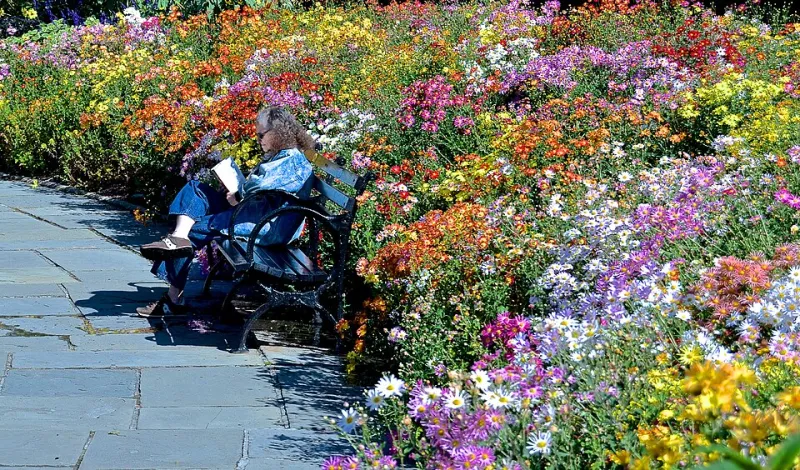
Photo: Tom Mills, CC BY-SA 2.0, via Wikimedia Commons
There is a particular kind of wisdom embedded in the way a garden responds to time. It does not resist change; it accommodates it, layer by layer, season by season. For those who approach their homes with a design-conscious eye, this principle offers something profoundly useful: the idea that a botanical interior need not be static. It can, and perhaps should, evolve in direct conversation with the life being lived inside it.
At Tierra Floral Design, we believe that floral and botanical artistry is not merely decorative—it is expressive. The arrangements you choose, the living installations you cultivate, and the plant companions you keep are quiet narrators of your current chapter. The question worth asking is not simply "what looks beautiful today?" but rather, "what does my space need to say about who I am becoming?"
The Botanical Home as a Living Timeline
Consider how differently a home might be inhabited at twenty-eight versus forty-five versus sixty-two. The square footage may remain the same, but the emotional and functional demands placed upon that space shift dramatically. A young professional establishing her first real apartment carries different needs than a couple welcoming a second child, or an individual navigating a divorce, or empty-nesters rediscovering the luxury of quiet.
Botanical design is uniquely suited to honor these transitions because living plant material is, by its very nature, impermanent and adaptive. Rather than treating floral elements as fixed furnishings, design-conscious individuals can use them as flexible visual anchors—elements that provide continuity while still permitting meaningful change.
The key is to build what might be called a botanical foundation: a core palette of textures, vessels, and plant forms that feel authentically yours, and then allow the specifics to shift as your circumstances evolve.
Establishing Your Botanical Foundation
A botanical foundation does not require a significant financial investment. It requires intention. Begin by identifying two or three plant forms that resonate with your current aesthetic sensibility—perhaps the architectural elegance of a fiddle-leaf fig, the quiet resilience of a trailing pothos, or the structured drama of a sculptural cactus arrangement.
Pair these living elements with vessels that possess genuine longevity: hand-thrown ceramic pots, aged terracotta, heavy-glass apothecary jars, or woven baskets with clean, classic proportions. These containers will serve you across multiple life chapters precisely because they are not trend-dependent.
From this foundation, you layer in the seasonal and circumstantial—fresh-cut arrangements that reflect your current mood, a new botanical print that speaks to where you are emotionally, a single dramatic bloom that marks a milestone. The foundation holds steady while the surface evolves.
Navigating Career Transitions Through Design
For many Americans, a career transition arrives with a disorienting mix of excitement and uncertainty. Whether you are launching a business from a home office, pivoting industries, or stepping back from the workforce to care for family, your environment can either amplify that disorientation or gently counteract it.
During periods of professional flux, botanical design can provide a grounding sensibility. Consider introducing plants with strong, upright growth habits—snake plants, monstera, or tall-stemmed dried pampas arrangements—into your workspace or adjacent living areas. These forms communicate stability and upward momentum without requiring you to articulate that need aloud.
Conversely, if burnout or creative depletion accompanies your transition, softer botanical choices—cascading ferns, low bowls of moss, or loose arrangements of wildflower-adjacent stems like Queen Anne's lace or chamomile—can introduce a quality of gentleness that a stressed nervous system quietly craves.
Welcoming New Family Members Without Starting Over
The arrival of a child—biological, adopted, or a new stepchild entering a blended family—reshapes domestic life in ways that are simultaneously joyful and logistically demanding. The instinct to completely redecorate is understandable but rarely necessary.
Instead, consider how your existing botanical foundation can be extended and adapted. If your home currently features dramatic, large-scale arrangements, introduce smaller, lower-placed botanical moments that invite a child's curiosity: a simple terrarium at accessible height, a shallow dish garden on a low shelf, a framed pressed-botanical print in a nursery.
As children grow, they become natural collaborators in botanical design. A weekend ritual of selecting flowers at a local farmers' market, or maintaining a small herb garden together, transforms botanical practice from a solitary aesthetic pursuit into a shared family language.
From a practical standpoint, this is also the moment to audit your plant collection for child and pet safety. Many beloved houseplants—including certain varieties of philodendron, dieffenbachia, and peace lily—carry toxicity concerns. The ASPCA and the American Society of Floral Designers both maintain accessible resources to guide these decisions.
The Empty Nest: Reclaiming Space Through Botanical Expansion
When children leave home, the rooms they occupied do not need to remain in quiet suspension. This transition, though emotionally complex, offers an extraordinary design opportunity: the freedom to expand your botanical vision into spaces that were previously unavailable to you.
Many empty nesters find that this chapter invites a return to the more considered, refined aesthetic they cultivated before family life required compromise. This might mean introducing a large-scale living wall installation in a reclaimed bedroom, establishing a dedicated propagation station in a former playroom, or finally committing to the orchid collection that always felt impractical with young children in the house.
The botanical home becomes, in this chapter, both a reflection of personal history and a declaration of the life still ahead. Photographs of children pressed alongside dried specimens from family gardens, botanical prints collected over decades displayed with new curatorial intention—these details transform a home into a living archive.
Allowing Grief and Renewal to Coexist
Not every life transition is celebratory. Loss, illness, divorce, and grief are equally real chapters, and the botanical home can hold space for those experiences with equal integrity.
In many American cultural traditions, flowers have long served as messengers of sympathy and solidarity. But beyond their ceremonial role, botanical elements can support emotional processing in quieter, more private ways. Studies in environmental psychology consistently suggest that access to natural forms—even within interior spaces—supports emotional regulation and reduces cortisol levels.
During difficult seasons, consider simplifying rather than abandoning your botanical practice. A single stem in a clear glass vessel. A small pot of living herbs on a windowsill. These are not inadequate substitutes for a fully realized botanical interior—they are, in their restraint, a form of honest design.
The Ongoing Conversation
The most sophisticated botanical homes are not the ones that appear most polished or most complete. They are the ones that feel genuinely inhabited—where the arrangement on the dining table carries the memory of last spring's garden, where the worn terracotta pot on the kitchen counter has traveled through three apartments, where the dried wreath on the front door was made during a quiet winter afternoon that deserved to be remembered.
Designing botanically through life's seasons is, ultimately, a practice of attentiveness. It asks that you notice what your space is communicating and decide, with intention, whether that message still serves you. At Tierra Floral Design, we believe that this kind of attentiveness—applied to flowers, to plants, to the living world brought inside—is among the most meaningful investments a design-conscious person can make.