The Everlasting Arrangement: Curating a Sophisticated Botanical Home Collection That Transcends the Seasons
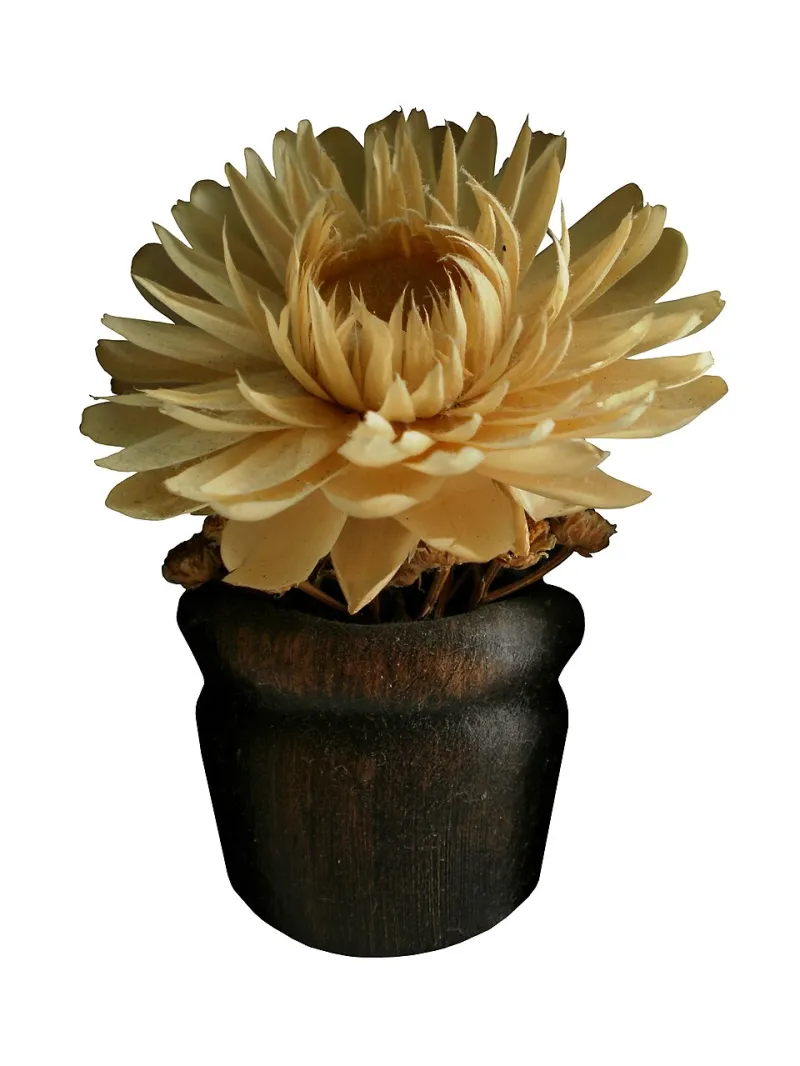
Photo: J.Dncsn, CC BY-SA 3.0, via Wikimedia Commons
Beyond the Vase: Rethinking the Botanical Accent
There is a moment familiar to anyone who loves flowers: the quiet melancholy of watching a prized arrangement decline. The petals soften and drop, the water clouds, and what was once a centerpiece becomes, within a week or two, a reminder of impermanence. For most people, this cycle simply prompts a return visit to the florist. For those with a more design-conscious sensibility, however, it raises a more interesting question—one that a growing community of botanical enthusiasts and interior designers across the United States are actively exploring.
What if the botanical aesthetic of a home did not depend on the continuous replacement of fresh material? What if, instead, it could be cultivated as a curated collection—something that deepens and evolves over time, the way a well-considered art collection or a thoughtfully assembled wardrobe does?
This is the premise behind the growing movement toward preserved, dried, and pressed botanical home accents. It is not a new concept in its individual elements—dried flower wreaths and pressed botanical prints have existed for centuries—but the contemporary approach to assembling these elements into a cohesive, sophisticated home collection represents something genuinely fresh.
Understanding the Techniques: A Brief Taxonomy
Before building a collection, it is worth understanding the primary preservation methods available and what each brings to a finished aesthetic.
Air-drying remains the most accessible technique and produces results with a characteristically rustic, textural quality. Hanging bundles of lavender, strawflowers, statice, and grasses upside down in a dry, well-ventilated space allows them to desiccate naturally while retaining much of their structural form. The colors shift—deepening, muting, or warming—in ways that can be extraordinarily beautiful. Air-dried botanicals tend to suit interiors with an organic, artisanal character.
Silica gel drying is a more controlled method that preserves color and dimensional form with considerably greater fidelity. Flowers are buried in silica crystals, which draw moisture out rapidly and evenly. Roses, peonies, and dahlias treated this way retain a startling lifelike quality, making them well-suited to more formal or polished interior contexts.
Glycerin preservation replaces the water content of botanical material with glycerin, resulting in supple, pliable foliage and stems that resist brittleness. Eucalyptus, magnolia leaves, and ferns respond particularly well to this method, retaining a soft, slightly lustrous appearance that reads as sophisticated in almost any interior setting.
Pressing flattens botanical material between absorbent layers under weight, producing two-dimensional specimens that lend themselves to framing, lampshade design, and decorative object-making. Pressed botanicals have experienced a significant revival in American interior design circles, appearing in everything from gallery walls to custom wallcoverings.
Resin encapsulation is perhaps the most contemporary technique, embedding flowers and foliage within clear or tinted resin to create objects—coasters, trays, decorative panels—that function as both preservation vessels and design objects in their own right.
Sourcing with Intention
Building a collection of preserved botanicals begins with thoughtful sourcing. The quality of the raw material determines the quality of the finished piece, and not all dried or preserved flowers are created equal.
For those who wish to preserve their own material, the optimal moment to harvest is just before a flower reaches full bloom—when the petals are fully formed but not yet at peak openness. This timing ensures that the botanical retains its shape through the drying process rather than shattering or collapsing.
For those who prefer to purchase preserved botanicals, the American market has expanded considerably in recent years. Specialty botanical suppliers, artisan dried flower farms—particularly in California, Oregon, and the Pacific Northwest—and small-batch preservationists offer material of a quality that was difficult to source domestically even a decade ago. Farmers' markets in larger metropolitan areas increasingly feature vendors specializing in dried arrangements, offering the added benefit of regional botanical character.
When evaluating preserved material for purchase, examine color consistency, structural integrity, and the absence of excessive brittleness or fading. High-quality preserved botanicals should feel considered and curated, not merely functional.
The Art of Curation: Building a Collection That Breathes
The distinction between a collection and a simple accumulation lies in intention. A well-curated botanical home accent collection is not merely a gathering of dried flowers; it is a considered assemblage of textures, forms, colors, and scales that functions cohesively within a living space while remaining open to evolution.
Begin with a foundation of botanicals that possess strong structural character and longevity: dried pampas grass, preserved eucalyptus, seed pods, and thistles provide the architectural backbone of a collection. These elements anchor a space and require minimal maintenance.
Layer in seasonal accents that reflect the current time of year. In autumn, incorporate dried maple leaves, bittersweet branches, and the warm amber tones of dried marigolds. In winter, lean toward preserved evergreen, dried citrus slices, and the sculptural geometry of dried protea. Spring invitations come through pressed wildflowers and the delicate silhouettes of dried cherry blossom branches. Summer calls for the saturated tones of silica-preserved dahlias and air-dried zinnias.
This seasonal layering is what distinguishes a living collection from a static display. The foundation remains constant; the accents rotate, allowing the home to remain in dialogue with the natural world even when the material itself is no longer living.
Styling Principles for Preserved Botanical Displays
Preserved botanicals require a slightly different styling approach than fresh arrangements. Because they will occupy a space for an extended period, their placement and composition merit greater deliberation.
Consider varying vessel heights and materials to create visual rhythm. A tall glass cylinder holding a cluster of dried pampas grass reads very differently from a low ceramic dish filled with preserved moss and seed pods—yet the two can coexist beautifully on a console table or bookshelf when the scale relationship between them is considered.
Allow negative space to work in your favor. Preserved botanicals often possess a quiet, contemplative quality that is undermined by overcrowding. A single stem of extraordinary dried amaranth in a narrow vase can be more powerful than an elaborate multi-stem arrangement.
Attend to light. Dried botanicals are particularly responsive to the quality and direction of light, casting intricate shadows and revealing textural nuance that fresh arrangements often obscure. Position your collection where it will receive considered—rather than harsh—illumination.
A Collection as a Practice
Perhaps the most meaningful dimension of building a preserved botanical home collection is the practice it cultivates: an ongoing attentiveness to the botanical world, its seasonal rhythms, its regional character, and its extraordinary range of form and color. Each piece added to a collection carries with it a history—where it was grown, when it was harvested, how it was preserved, and what it contributes to the visual story of the home it inhabits.
At Tierra Floral Design, we believe that the most beautiful spaces are those that reflect a genuine relationship with the natural world. A curated botanical collection, built slowly and with care, is one of the most eloquent expressions of that relationship a home can offer.