When Florists Meet Architects: The New Collaborative Language of Botanical Interiors
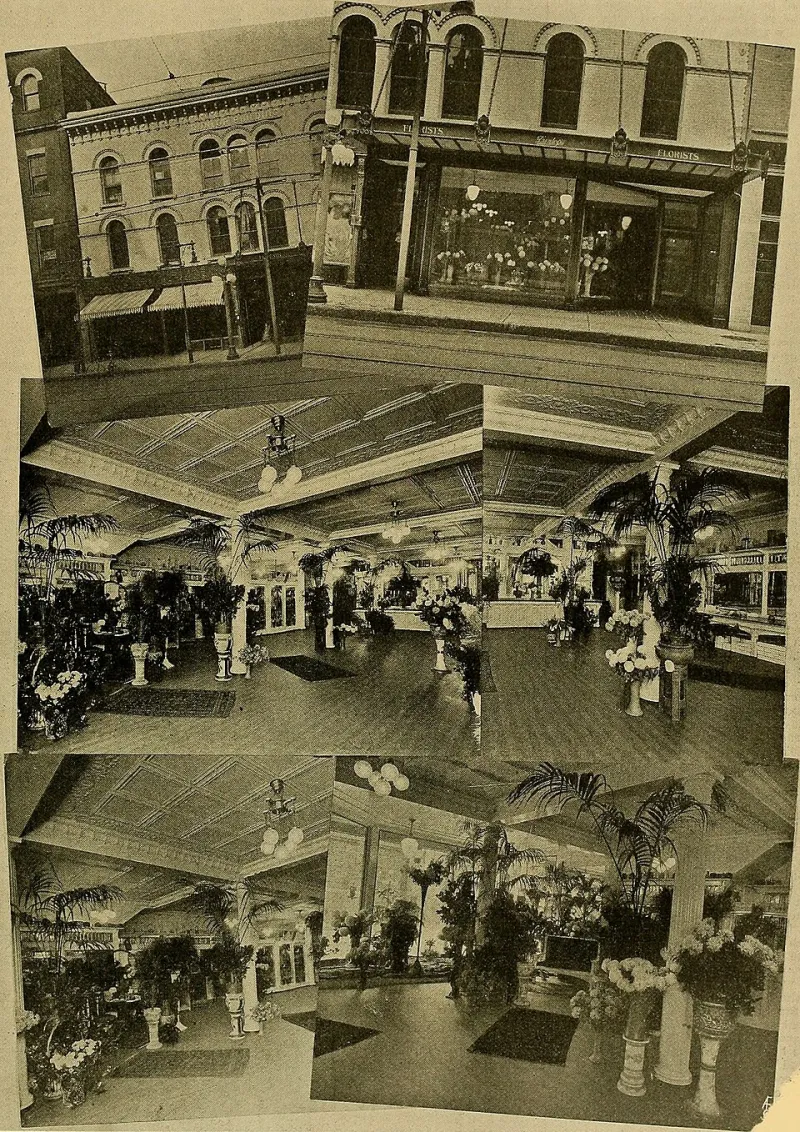
Photo: Internet Archive Book Images, No restrictions, via Wikimedia Commons
For much of the twentieth century, the relationship between interior design and floral artistry was sequential rather than integrated. An interior designer would complete a space—selecting furniture, finishes, textiles, and lighting—and a florist would be called in afterward to add the finishing botanical flourishes. The flowers were beautiful, certainly. But they were also, in a fundamental sense, decorative afterthoughts: elements applied to a completed canvas rather than woven into its very construction.
That model is changing. Across the United States, a growing number of forward-thinking florists, interior designers, and event design studios are dismantling the old sequence entirely. They are entering creative partnerships at the earliest stages of a project—sometimes before floor plans are finalized, before upholstery fabrics are sourced, before a single decision about color has been made. The result is something distinctly different from the traditional decorator-and-florist arrangement: it is a genuinely collaborative design language in which botanical elements are structural, not supplemental.
The Case for Early Integration
The logic behind early collaboration is, in retrospect, straightforward. Interior design and botanical design share a vocabulary—color, texture, scale, rhythm, negative space—and when practitioners from both disciplines engage that vocabulary simultaneously, the results tend toward a coherence that neither could achieve working independently.
Charlotte Meyers, a New York-based interior designer who has been collaborating with floral studios for the past five years, describes the shift in practical terms. "When I bring a botanical partner into the conversation at the concept stage, we can make decisions together that neither of us would make alone," she explains. "The choice of a particular tile color might be informed by the fact that we've already decided the seasonal installations will lean toward terracotta and rust. The height of a built-in bookshelf might be calibrated to accommodate a living plant element we've planned from the beginning. Everything becomes intentional in a way that simply isn't possible when you're working in sequence."
This philosophy aligns naturally with the broader direction of American design culture, which has moved steadily toward integrated, experience-driven environments—spaces that are designed not merely to look beautiful in photographs but to be inhabited fully, with all the sensory richness that implies.
A Case Study in Collaboration: A Washington, D.C. Event Space
One of the most compelling illustrations of this collaborative approach can be found in the redesign of a private event venue in Washington, D.C. The project brief called for a space that could accommodate everything from intimate dinner parties to large-scale corporate gatherings, while maintaining a consistent botanical identity throughout.
The design team—a partnership between an interior design firm and a botanical studio—began their collaboration with what they describe as a "botanical brief": a document that established not just the aesthetic direction of the plant elements, but their structural and atmospheric role within the space. Living moss walls were specified alongside the architectural drawings, not added afterward. Custom millwork was designed with integrated planters. The lighting scheme was developed in direct conversation with the botanical team to ensure that both fresh and preserved plant elements would be rendered at their most expressive under the final light conditions.
The result is a space where the botanical and the architectural feel genuinely inseparable. Guests consistently report that the environment feels "alive" in a way that is difficult to attribute to any single element—which is, of course, precisely the point. When design disciplines are integrated rather than layered, the seams disappear.
The Florist as Creative Consultant
For florists, this evolving collaborative model represents both an opportunity and a professional expansion. It asks them to think beyond the arrangement—beyond even the installation—and to consider how botanical elements function within a designed environment over time.
Marco Delgado, a Los Angeles-based floral designer who works extensively with event and hospitality spaces, notes that this shift has required him to develop fluency in the language of interior design. "I've had to learn to read architectural drawings, to understand how light behaves in a space at different times of day, to think about botanical elements in terms of their long-term maintenance and seasonal evolution," he says. "It's made me a better designer, because it's forced me to think systemically rather than in terms of individual pieces."
This expanded role—florist as creative consultant rather than service provider—is increasingly reflected in the way collaborative projects are structured contractually and financially. Botanical partners are being brought in on retainer arrangements, included in design team meetings, and credited as co-designers on completed projects. The professional recognition is catching up, gradually, with the creative reality.
What This Means for the Design-Conscious Homeowner
The principles driving these high-level professional collaborations are directly applicable to residential projects of any scale. For homeowners who aspire to botanical environments of genuine sophistication, the central lesson is this: think about botanical elements before you think they need to be considered.
If you are planning a significant renovation or redesign, consider engaging a floral designer or botanical consultant at the same stage you would engage a lighting designer or textile specialist. Share your mood boards. Discuss your color palette. Talk about how you intend to use the space across different seasons and occasions. A botanical perspective introduced early in this process will yield decisions—about vessel storage, about natural light, about the placement of surfaces and ledges—that simply cannot be made as effectively after the fact.
For those planning events, the same principle applies. The most memorable gatherings are those in which the botanical elements feel native to the space rather than imported into it. This is only achievable when the floral design and the spatial design are developed in conversation with each other.
Building Your Own Collaborative Approach
For homeowners ready to explore this integrated model, the practical starting point is communication. Before approaching either a florist or an interior designer independently, develop a clear articulation of what you want the botanical dimension of your space to do—not just how you want it to look, but how you want it to make the people in that space feel, and how you want it to evolve across seasons and occasions.
Bring that brief to both creative partners simultaneously. Facilitate a conversation between them. Resist the impulse to keep their work siloed, and instead encourage the kind of cross-disciplinary exchange that produces genuine integration.
At Tierra Floral Design, this collaborative philosophy is foundational to everything we create. We believe that the most extraordinary botanical environments are never the result of one discipline working in isolation. They are, invariably, the product of creative disciplines in genuine dialogue—each informing and elevating the other, in service of a space that is more alive, more coherent, and more deeply beautiful than either could have produced alone.